Patience Makwele
The ministry of health and social services has launched an internal administrative investigation after an intern doctor stationed at Onandjokwe Intermediate Hospital appeared in the Ondangwa Magistrate’s Court on a charge of rape.
Dennis Iipumbu Noa (31) was remanded in custody on Monday after the State opposed bail. State prosecutor Aina Magano Mwaala argued that the State has a prima facie case against the accused and raised concerns that he could interfere with witnesses or abscond. The matter was postponed to 27 October 2026 for a formal bail application.
According to the police, the alleged incident occurred on Friday after Noa invited the 26-year-old complainant to Oniipa to celebrate his new job. Police allege the complainant travelled to the hospital, where the two went to the doctor’s room on the hospital premises.
The complainant alleges Noa bought him alcoholic beverages before he noticed what appeared to be a pill dissolving in one of the drinks. After consuming it, he allegedly became nauseous and was sexually assaulted. He told police he escaped by breaking a window after finding the room locked and later regained consciousness in a hospital bed. Both the complainant and the accused underwent forensic medical examinations.
The latest charge comes less than two years after the High Court overturned Noa’s conviction in an unrelated rape case involving a male patient at Katutura Hospital.
Noa had been convicted and sentenced to eight years’ imprisonment after being found guilty of raping an unconscious patient in April 2021. However, in November 2024, the High Court set aside the conviction after finding that the State had failed to prove the charges beyond a reasonable doubt.
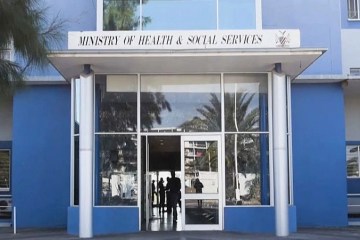
In a statement issued on Monday, the ministry of health and social services said it had activated an internal administrative investigation while the police investigation continues.
“The Ministry treats these allegations with the utmost seriousness. Such allegations are deeply concerning and are fundamentally inconsistent with the ethical standards, professional conduct and values expected from all health professionals serving under the Ministry,” executive director Penda Ithindi said.
The ministry said it condemns all forms of sexual violence and remains committed to ensuring a safe, respectful and professional healthcare environment for patients, staff members and the public.
Medical practitioner and health expert Buchane Nalucha said while an arrest should not be interpreted as proof of guilt, allegations against healthcare professionals inevitably affect public confidence in the health system.
“Medicine is built on public trust. Patients place themselves in vulnerable situations with healthcare workers, so any allegation of abuse is treated extremely seriously because it affects confidence in the profession as a whole,” she said.
Buchane said healthcare institutions have a responsibility to protect patients while criminal and administrative processes run their course, noting that employers often place employees on precautionary suspension pending the outcome of investigations.
She also said the case highlights the challenges male survivors of sexual violence face in reporting abuse.
“Many men suffer in silence because of stigma. We should be encouraging victims to come forward and ensuring they are treated with dignity when they report these crimes. The boy child also deserves to be heard and institutions must create an environment where male survivors feel safe enough to report sexual violence,” he said.
Clinical psychologist Catherine Varaidzo Tafadzwa said allegations involving trusted professionals can have a profound psychological impact on survivors because they undermine a person’s sense of safety.
“Cases like this often leave survivors dealing with much more than the immediate trauma. They may experience anxiety, fear, shame, difficulty sleeping and a loss of trust in other people, particularly if the alleged perpetrator is someone in a position of authority or trust,” she said.
Tafadzwa said institutions also have a responsibility to respond transparently while respecting due process.
“Whenever allegations involve a trusted professional, institutions should communicate clearly, support anyone affected and ensure established procedures are followed. A transparent response helps maintain public confidence while also respecting the rights of everyone involved, including the presumption of innocence during the legal process,” she said.
She urged the public to allow the criminal justice process to take its course.
“It is important that the public avoids rushing to conclusions about the accused while at the same time taking allegations seriously. Those two principles are not contradictory. We can support an investigation, encourage survivors to seek help and allow the courts to determine criminal responsibility,” Tafadzwa said.