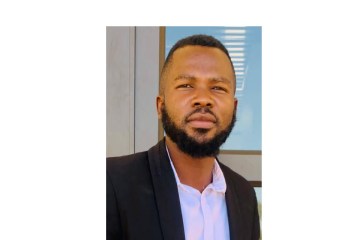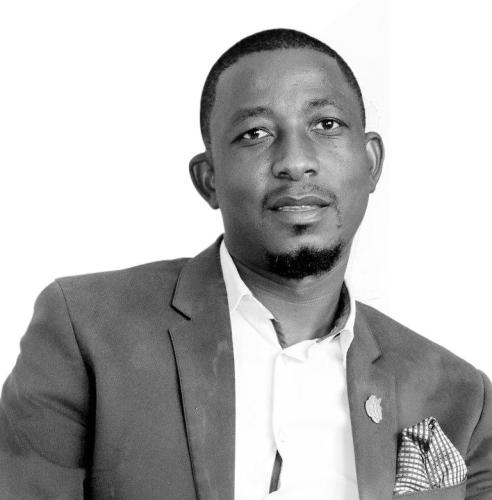
Sem Billy David
A government that remembers its people only when elections approach is not governing. It is managing an image.
One year or few months to elections, the familiar machinery of electioneering is already beginning to move. The speeches return. The convoys are prepared. The promises are polished. The political dust shoes are waiting to be disturbed.
Namibians know this cycle too well. We are told that it is governance, but much of it is not governance at all. It is campaigning disguised as public service, political theatre presented as leadership, and temporary compassion performed for permanent votes.
Frantz Fanon warned us about the danger of a political class that inherits the language of liberation without inheriting its moral responsibility.
Such a class speaks in the name of the people but remains distant from their daily suffering. It displays revolutionary symbols while reproducing the same abandonment, inequality, and exclusion that liberation was supposed to destroy.
Thomas Sankara understood that leadership must be measured not by its speeches, ceremonies, or motorcades, but by the material conditions it creates for ordinary people.
For Sankara, power was not a privilege to be displayed; it was a responsibility to be exercised in the service of the people.
Namibia must therefore confront two forms of political deception: the seasonal politician and the seasonal project.
The seasonal politician
For four years, the seasonal politician was largely absent. They may appear on television, at official ceremonies, or in the comfort of shopping centres and coffee establishments, but they are rarely present where the nation’s deepest wounds are visible.
They no longer know the roads to Opuwo or Impalila. The far corners of Kunene and Zambezi become distant territories, visited only for private interests, official ceremonies, or carefully staged public events.
They do not walk through Baboon City, Otjomuise 8ste Laan, Okahandja Park, Goreangab Dam, Havana, or Babylon informal settlements to understand how people fetch water, find shelter, search for work, find schools or raise children without security. They remain silent when citizens cry for assistance and call that silence “strategy.”
Then an election approaches. Suddenly, the seasonal politician’s shoes are ready to become dusty. They are prepared to sleep in a shack, share a poor meal, drink traditional beverages, attend every funeral, and display compassion before the cameras.
Convoys of hundreds of vehicles travel along gravel roads, financed by public resources or money whose origins are rarely questioned. Large flags are raised, liberation songs fill the air, and political nostalgia is used to conceal present failure.
The seasonal politician is filmed sitting on a plastic chair, standing in the sand, walking through a remote village route, or drinking omaere, tombo, and shafuluka. They listen with theatrical seriousness, as if poverty has just been discovered.
They tour informal settlements in fleets of four-wheel-drive vehicles, wave at children they may not remember the following day, and embrace people whose suffering will disappear from their political vocabulary after the ballots are counted.
Then comes the manifesto: eighty pages of magnificent promises. Smart cities. Employment for every young person. Green hydrogen for every household. Ten thousand houses each year. Higher increases for public servants and elders pension. Better roads. New clinics. A transformed nation.
And then the election ends. Whether the politician wins or loses, the people are often left with the same result: silence. No delegation returns to say, “We have come back to fulfil what we promised.” Telephone calls go unanswered. Numbers change.
Villages become invisible again. Settlements return to neglect. Anger remains. Frustration deepens. Life continues in the same circle. The politician returns only when another election approaches and the shoes once again need to become dusty.
That is not leadership. It is a political performance.
Leadership is presence when there is nothing to gain. It is responsibility without cameras, service without applause, and accountability without the pressure of an approaching election.
The seasonal project
The second deception is even more dangerous: the acceleration of government projects only when elections are near. Two months before voting, the country suddenly appears to awaken.
Road graders begin working. Earth-moving machinery arrives. Tenders that slept for years are approved with extraordinary urgency. Streetlights are installed. Gravel roads are graded repeatedly. Clinics are painted. Medicines appear.
Ministers and officials cut ribbons every week, sometimes for projects that are incomplete, inadequate, or not ready for use.
The people are encouraged to believe that development has finally arrived. But often, development has not arrived. It has merely been rented for the campaign.
After the election, the machines stop. The grader is parked. The contractor disappears. The project stalls. The road that was graded for votes is destroyed by the first serious rainfall because it was constructed for spectacle rather than durability.
The potholes return. The promises fade. The people remain. Meanwhile, councillors, governors, and municipal executives travel from conference to conference, spending public money on accommodation, meals, cigarettes, and political networking while claiming that there is no money for development.
This is not governance. It is the use of government as an electoral instrument.
Every rushed and substandard project undertaken for political advantage represents resources taken away from sustainable development.
Every campaign stunt financed through public funds creates a temporary illusion of progress while guaranteeing years of frustration.
The people are not a campaign audience
Fanon insisted that liberation must transform the lived reality of the people. Independence cannot be reduced to flags, speeches, uniforms, or the transfer of offices from one political class to another.
If the people remain excluded, poor, unheard, and abandoned, then political independence has not yet become social freedom. Sankara’s politics carried the same moral demand: leaders must live with discipline, humility, and accountability.
Public office is not a stage from which leaders perform closeness to the poor. It is a responsibility to remove the conditions that keep people poor.
True leadership does not visit remote communities because they contain votes. It visits them because they are part of the country.
True leadership does not enter informal settlements only when elections are near. It goes there because people live there every day—without reliable water, adequate housing, secure employment, sanitation, and hope.
True leadership does not need to rent crowds with state-funded food parcels. It makes schools function, water flow, clinics operate, roads endure, and public budgets speak for the poor throughout the year.
The dignity of the people cannot be reduced to a campaign photograph. Their hunger cannot be managed through temporary gifts. Their future cannot be postponed until the next manifesto.
Govern before you campaign
If you intend to contest an election for another term, you have years to prove that you are not a dusty-shoe politician.
Do not wait to be seen. Show your work.
Be present when it is not fashionable. Return after making promises. Publish what has been achieved, what has failed, and what remains unfinished. Spend public money as though it belongs to the people—because it does.
Build institutions rather than spectacles. Create durable roads rather than temporary impressions. Strengthen schools rather than speeches.
Expand access to water rather than distributing bottles during campaign rallies. Invest in human dignity rather than political symbolism.
The people do not need leaders who perform poverty for a season. They need leaders who confront poverty as a permanent political responsibility.
A government that campaigns constantly but governs rarely has misunderstood the meaning of power. Power is not the ability to appear everywhere before an election. Power is the ability and willingness to improve lives when nobody is watching.
Namibia must break this cycle.
We must reject the politics of seasonal compassion, electoral theatre, and government-funded deception. We must demand leadership that is present, accountable, disciplined, and materially committed to the people.
This article is not directed at any particular individual. However, if it speaks to you, receive it as an invitation to self-reflection. Be willing to change, correct your assumptions, and do better.
Replace political performance with meaningful understanding. Replace empty promises with measurable action. Replace the dusty shoe of election season with the steady footsteps of year-round service.
That is how we separate campaigning from governing.That is how we restore dignity to public leadership. That is how a nation moves from political independence toward genuine freedom.
For constructive engagement, workshops, policy and law reform, community development advocacy, and programs:Email: semmydmd@gmail.com