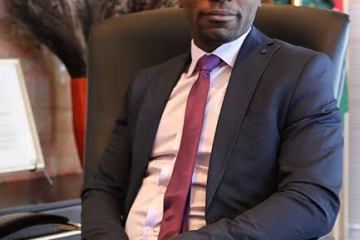
Andrew Kathindi
The Ministry of Gender Equality, Poverty Eradication and Social Welfare has stated it does not support recent calls to legalize abortion in Namibia.
This declaration was made amid increased calls after an online petition by psychological counsellor, Beauty Boois calling for the legalizing of abortion in the country, garnered over 4,000 signatures.
Currently, abortion is illegal in Namibia except under specific conditions involving a pregnancy due to proven rape or incest according to the Abortion and Sterilisation Act of South Africa of (1975), which Namibia inherited at independence in 1990. This remnant law from the apartheid days has not been updated.
Executive Director in the Gender Ministry, Esther Lusepani told Windhoek Observer although the ministry has noted the public call to legalize abortion; it is not something being considered by her ministry at this time.
“We are aware of the outcry but we are not supporting it. This is the stance we are taking for now. We will listen to whatever they are saying, but the country is providing family planning. We are providing a lot of counseling to boys and girls, about how to have responsible sex. The country is providing condoms, we are making all these efforts,” she said.
While abortion is illegal in the country, it has not stopped desperate women and young girls finding alternatives, often dangerous, means.
“Right now we’re keeping the stance embodied in the existing laws which the government is taking. Abortion, outside the conditions stated in the Act, is not legal in the country,” Lusepani said.
“Counseling and support structures will also need to be implemented in order to empower Namibian women, who are considering or have undergone abortion with the necessary guidance and support to make well-informed decisions and freely practice rights and freedom of autonomy over our own bodies,” she added.
Quizzed on rising cases of baby dumping in the country, which has been attributed to unwanted pregnancies, the Gender ministry Executive Director said, “We are dealing with baby dumping by putting a lot of awareness information in the public. We are strongly promoting that instead of dumping; let them bring the children to the ministry. We have childcare facilities. We have social workers to deal with that.
“We have an adoption policy in the country. So, when a young person feels that they cannot deal with the baby they have, let them come to us. We have offices all over the country in 14 regions and social workers in each of those regions.”
“We’ll take the child if you don’t want the child. Let them bring the children. We don’t have enough kids in this country. We are only 2.6 million,” pleaded the Gender Ministry official.
Director of Child Welfare in the Gender Ministry, Helena Andjaba said women who bring unwanted babies to the ministry will not be prosecuted. She further noted that children brought to the ministry do get into homes; a family still remains the primary unit where a child can be brought up properly.
“So even if we have alternative homes, we don’t wish for children to remain in these homes for 18 years. If there are natural families and relatives of these abandoned children, we call upon them to come to us to say they want to take a child into their care. That is foster care, or they want to adopt a child, we can help with that. Then we go through the steps of assessing them whether they are suitable to adopt a child,” she said.
According to reports, 74 people have been arrested over illegal abortion in the country over the past five years.