CHAMWE KAIRA
The five-year Employment Permit for Conducting Business was gazetted on 24 July 2026 and came into effect in September, allowing qualifying investors to obtain longer-term permits as the government implements reforms to improve Namibia’s investment and immigration framework.
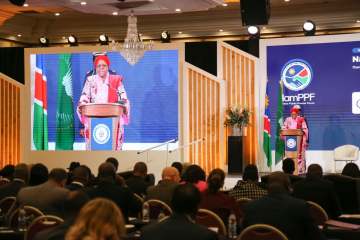
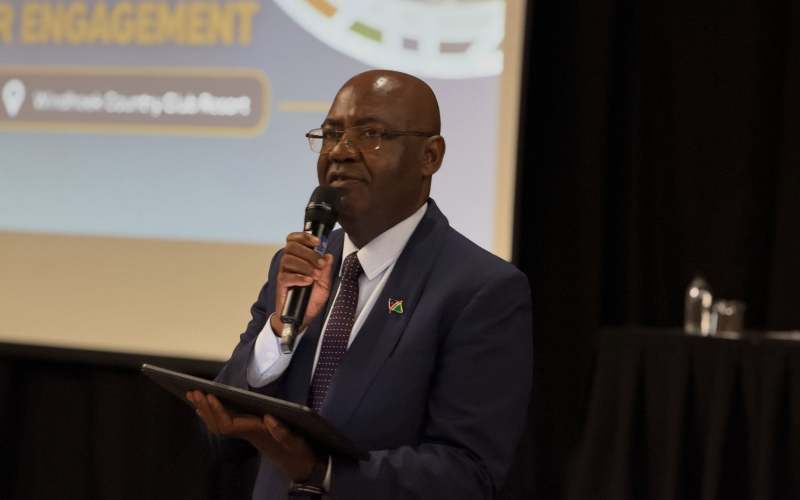
The reform was among the completed commitments recorded in the Economic Recovery Task Force (ERTF) progress report presented at the second Namibia Public-Private Forum (NamPPF II) in Windhoek on Wednesday by National Planning Commission (NPC) executive director, I-Ben Nashandi.
The report also recorded progress in streamlining skills entry and granting work rights to investors, as well as the tabling of the Investment Bill.
However, the digitalisation of student and employment permits remains unimplemented, while the proposed Migration Bill has yet to be enacted following public consultations held in June 2026.
The report tracks 17 presidential directives across five thematic intervention areas. Only three (18%) are on track, while four (24%) are in progress but face implementation bottlenecks. The remaining 58% are stalled.
The overall Economic Recovery portfolio was classified as red, indicating the need for Cabinet intervention and improved coordination between government ministries.
Namibia’s Economic Recovery Task Force (ERTF) has recorded limited progress in implementing presidential economic recovery directives.
The overall Economic Recovery portfolio was classified as red, indicating the need for urgent Cabinet intervention and improved coordination between government ministries.
Some of the completed commitments include reforms to investor visas and skills entry, the tabling of the Investment Bill, and the introduction of a reduced corporate tax rate of 20% for micro, small and medium enterprises (MSMEs).
The five-year Employment Permit for Conducting Business was gazetted on 24 July 2026 and came into effect in September, allowing qualifying investors to obtain longer-term permits.
The government has also operationalised a Business Registration One Stop Shop at the Namibia Investment Promotion and Development Board (NIPDB) and Business and Intellectual Property Authority (BIPA) premises in January 2026.
The facility brings together representatives from 15 offices, ministries and agencies to streamline business registration and related services.
However, the report noted that the platform still requires better coordination and digitalisation to improve its efficiency.
All three presidential task forces covering economic recovery, health and housing were appointed on 1 December 2025 and submitted their final reports by the extended deadline of 31 March 2026.
Directives arising from the reports were subsequently issued to relevant ministries on 28 April 2026.
The NamPPF has also been formally placed under the NPC as a results-driven platform, with its inaugural outcome report and terms of reference for the task forces completed.
Despite the progress, several legislative and administrative reforms remain incomplete. The proposed reduction in the general corporate tax rate from 30% to 28% has not been gazetted, despite the commitment to implement the reduction.
Other ongoing commitments include implementing the Agricultural Food Sector Implementation Plan, strengthening capacity within the Plant Health Division and establishing a digital tracking dashboard under the NPC and NIPDB.
Government ministries are also continuing efforts to address over-regulation and red tape following presidential directives issued with an 31 August 2026 reporting deadline.
Two major commitments were classified as stalled. These include the proposed tax incentives for Special Economic Zones (SEZs), which envisage a 20% tax rate, with consideration for a reduced 15% rate for investments with significant economic impact.
The incentives remain dependent on the finalisation of the SEZ Bill, which is currently before the Cabinet Committee on Legislation.
The report also noted that the grandfathering period under the Export Processing Zones Act ended in December 2025, although a six-month extension was granted.