Staff Writer
The country’s agricultural sector faces mounting pressure from foot-and-mouth disease (FMD), the threat of drought, rising input costs and higher borrowing rates, with the Namibia Agricultural Union (NAU) warning that further financial strain on farmers could result in additional job losses.
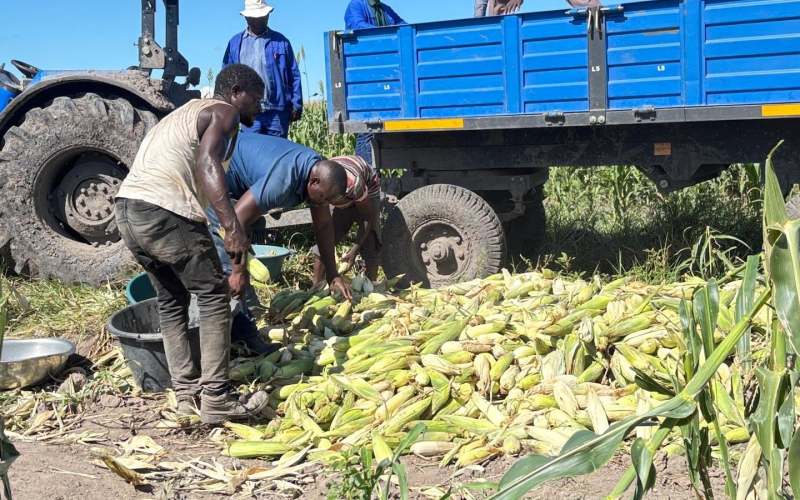
In its economic outlook presented to the NAU this week, the union said commercial agriculture supports approximately 55000 direct jobs and about 200 000 dependents, making the sector an important source of employment and household income, particularly in rural areas.
Agriculture, forestry and fishing employed 88 277 people, representing about one in every six employed Namibians.
The NAU said Otjozondjupa, //Kharas and Omaheke regions account for almost 29 000 farm jobs, with limited alternative employment opportunities available in these areas.
National employment has also declined, falling from approximately 726 000 in 2018 to 547 000 in 2023. Over the same period, employment in agriculture, forestry and fishing dropped from 167 242 to 88 277.
The warning comes as broad unemployment stands at 54.8%, while unemployment among people aged between 15 and 34 is 61.4%.
The NAU identified six pressures facing farmers simultaneously, including FMD restrictions, drought risks, higher input costs, rising interest rates, government financing constraints and limited alternative employment opportunities for displaced farm workers.
Namibia’s FMD-free status was suspended in September, followed by a nationwide ban on the movement and export of cloven-hoofed animals. The United Kingdom and European Union also tightened import restrictions.
The NAU estimates that an export-ban scenario could reduce Namibia’s gross domestic product (GDP) by N$3.4 billion.
The outlook is further complicated by the possibility of a strong El Niño weather phenomenon.
The United States National Oceanic and Atmospheric Administration (NOAA) puts the probability of a very strong El Niño above 90%, while regional forecasts point to below-normal rainfall between January and March 2027.
According to the NAU, a combination of drought and FMD could increase the estimated GDP loss to N$4.4 billion.
The government’s financing requirements and limited fiscal room could also restrict its ability to introduce relief measures.
The NAU puts the government’s financing requirement for the current year at N$22.1 billion and says the government had a net overdraft of N$2.6 billion at the Bank of Namibia in August.
The union expects cash flow, rather than profit margins, to become the main constraint for farmers through 2027 as income comes under pressure while operating and borrowing costs increase.
It warned that labour could become one of the few remaining costs farmers can reduce when cash resources are exhausted.
The NAU said retaining existing agricultural employers was important because of the limited capacity of the economy to absorb workers displaced from farming.
It argued that farmers who remain operational over the next 18 months would continue supporting employment, household incomes, school attendance and economic activity in rural communities.