
Staff Writer
Private sector credit growth is expected to slow from the first quarter of 2027 as higher interest rates filter through the banking system, despite lending reaching its fastest annual growth rate in a year in September, according to Simonis Storm.
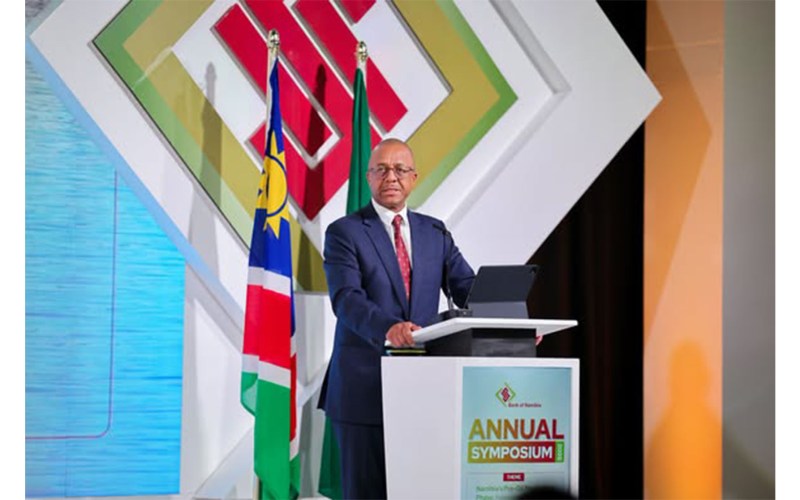
The Bank of Namibia (BoN) raised its repo rate by 25 basis points to 7% on 28 October, bringing the prime lending rate to 10.50%, with the increase expected to gradually dampen credit demand over the next two to three quarters.
According to a market assessment by Simonis, monthly private sector credit flows are expected to decline from an average of about N$890 million in the third quarter to between N$450 million and N$500 million in the fourth quarter, before slowing further to approximately N$350 million a month in the first half of 2027.
The assessment expects the BoN to keep rates unchanged at its 8 December meeting, followed by a possible final 25-basis-point increase to 7.25% early next year if inflation peaks above 6%. It does not expect interest rate cuts before late 2027.
The latest credit statistics show that private sector credit extension (PSCE) increased by 5.6% year-on-year in September, up from 5.4% in August, marking its fastest growth since September 2025.
The total credit extended to businesses and households increased by N$1.06 billion to N$128.2 billion during the month.
Corporate borrowing accounted for N$656.8 million, representing 62% of the monthly increase, while household credit contributed N$403.5 million.
Banks extended N$2.68 billion in credit during the third quarter, compared with N$2.14 billion in the second quarter and N$1.02 billion in the first quarter.
Year-to-date credit growth reached N$5.84 billion, 39% higher than the N$4.20 billion recorded during the corresponding nine months of 2025.
However, after adjusting for September’s inflation rate of 5.4%, real private sector credit growth was only 0.2%, down from 0.3% in August.
Simonis said the increase in nominal credit demand partly reflects higher prices, with businesses and households requiring more borrowing to finance the same volumes of fuel, stock and vehicles.
It expects annual credit growth to rise further in the final quarter of 2026, reaching approximately 6.4% in October, 6.3% in November and 6.0% in December.
The projected increase is largely attributed to base effects, particularly the N$443.6 million contraction in credit recorded in October 2025.
This means even relatively moderate monthly lending could produce higher annual growth rates.
The assessment expects PSCE growth to ease to approximately 5% by June 2027 as monthly lending slows and the comparison base strengthens.
Inflation is expected to rise to about 5.8% by December and peak at approximately 6.2% in March 2027, before easing to 4.7% by June.
The assessment also points to the delayed impact of previous interest rate cuts as a factor behind the recent recovery in lending.
The BoN reduced the repo rate by a cumulative 125 basis points to 6.50% by October 2025. The effects of rate reductions generally take between six and 12 months to feed through to credit demand.
This has been reflected in household mortgage lending, which has accelerated for five consecutive months, while commercial mortgage lending has also returned to positive growth.
However, the latest rate increase, alongside the earlier rise in borrowing costs, is expected to increasingly constrain lending from 2027.
The October repo rate increase adds further pressure on borrowers, with the assessment advising households and businesses to prepare for a prime lending rate of 10.75% in 2027.
Meanwhile, broad money supply contracted by N$2.76 billion, or 1.5%, to N$181 billion in September, while annual growth slowed to 8% from 10.2% in August.
Net foreign assets declined by N$3.04 billion to N$81.8 billion, with commercial banks’ foreign assets falling by N$3.74 billion to N$38.5 billion.
The Bank of Namibia’s foreign reserves, however, increased by N$810.7 million to N$59.3 billion.
The assessment attributed the pressure on foreign assets partly to import payments, with Namibia’s merchandise trade deficit nearly doubling to N$33.5 billion during the first eight months of 2026, largely driven by fuel imports.
Government borrowing also continued to absorb a growing share of banking sector resources.
Net claims on government increased by 42.5% year-on-year, with government borrowing rising by N$15.2 billion over the year, compared with N$6.8 billion in additional credit extended to businesses and households.