Renthia Kaimbi
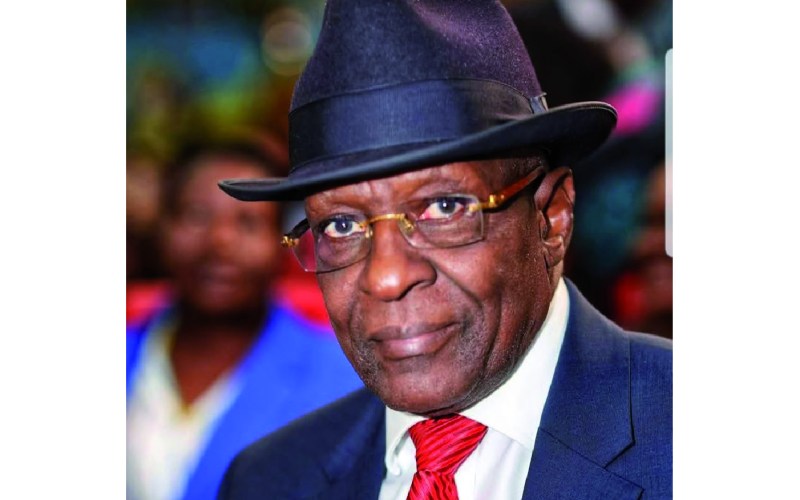
National Planning Commission Director-General Dr Kaire Mbuende has called for a balance between environmental conservation and industrial development, warning that environmental concerns should not become an absolute barrier to economic activity.
Speaking at the inaugural African Green Industries Summit at the Swakopmund Hotel and Entertainment Centre, Mbuende said Namibia should not view conservation and development as mutually exclusive.
“Concerns about the environmental impact of large-scale industrial development, particularly in sensitive areas, must be taken seriously. Namibia should not be forced to choose between development and conservation. That is a false choice,” he said.

Mbuende pointed to the Tsau //Khaeb (Sperrgebiet) National Park as an example of an area where conservation and development can coexist.
“I visited the Tsau //Khaeb and there are certain grass species that need protection but there is development happening there,” he said.
He argued that the presence of sensitive flora and fauna should not automatically prevent development, provided environmental considerations are properly assessed.
“Flora and fauna in certain areas like the Tsau //Khaeb should not be an absolute barrier to development,” Mbuende said.
His remarks come in light of a dispute in the Kunene Region involving mining claim holder Timoteus Mashuna and communal conservancies, including Doro !Nawas Conservancy and Uibasen Twyfelfontein conservancies.
The conservancies have formed a joint management area with private tourism operator ultimate.earth (formerly Ultimate Safaris).
They have raised concerns that mining activities, including blasting, could threaten endangered black rhinos in the area, which is also important to their tourism operations.
The dispute has resulted in court proceedings, with the High Court previously issuing interim interdicts restricting Mashuna from conducting mining activities on his mining claims in the Sorris Sorris conservation area.
The conflict has also brought the tourism arrangements between the conservancies and ultimate.earth under scrutiny from the Namibian Competition Commission (NaCC).
The commission recently confirmed that it is investigating allegations concerning 50 exclusive-dealing arrangements between conservancies and private tourism operators.
The investigation followed a complaint like Mashuna’s, who alleges that a joint management agreement involving the three conservancies and ultimate.earth prevented other economic activities as well as tourism operators from establishing camps or lodges in the area.
The NaCC said its investigation forms part of its statutory responsibility to enforce Namibia’s competition laws and promote fair participation in the market.
“The commission is therefore committed to ensuring that any regulatory intervention supports the sector’s long-term sustainability and competitiveness,” it said.
The commission also sought to reassure tourism stakeholders that the investigation was not intended to hamper, disrupt or undermine tourism operations.
It said it was engaging the ministry of environment, forestry and tourism (MEFT) to find a practical response to concerns arising from the investigation.
“The discussions focus on harmonising the legal frameworks governing the tourism sector so that environmental conservation, economic empowerment, investment promotion and competition policy are advanced coherently and in a complementary manner,” the NaCC said.
According to the commission, competition law is intended to safeguard market opportunities, encourage innovation and prevent practices that may unduly lessen, distort or restrict competition.
It acknowledged that certain contractual arrangements can promote investment certainty and other policy objectives, but said such arrangements must remain consistent with fair competition and inclusive economic participation.
The NaCC and MEFT are therefore working towards a regulatory framework for tourism activities in conservancies and national parks that is aligned, predictable and supportive of Namibia’s development priorities.
“The aim is to balance conservation, investment, community benefits and competitive markets,” the commission said.
Mbuende also used his address to emphasise that Namibia’s green transition should extend beyond the energy sector.
“This is why Strategic Environmental and Social Assessments are being undertaken in Namibia’s (three) green hydrogen valleys,” he said.
According to Mbuende, the assessments consider cumulative environmental and social impacts, identify sensitive areas and help determine where development should proceed, where mitigation is necessary and where development should be avoided.
He said Namibia’s green transition should ultimately contribute to industrialisation and employment creation.
“It must become an industrial and employment transition. Let us use our resources responsibly, build competitive industries, create opportunities for our people and ensure that the green economy delivers tangible development,” Mbuende said.