Sostenus Wilherm
A Namibia-China agricultural cooperation project has reached 2 351 beneficiaries through 79 training events, with women accounting for more than half of those trained, as the government seeks to strengthen farming skills and rural livelihoods.
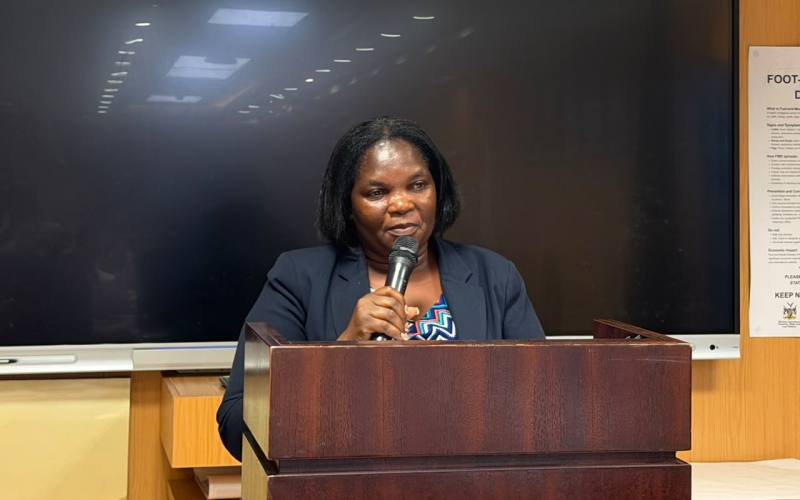
Deputy minister of agriculture, fisheries, water and land reform Ruthy Masake announced the figures on Wednesday during the official closure of Phase II of the China–FAO–Namibia South-South Cooperation Project in Windhoek.
Implemented from September 2024 to December 2026 with support from China through the Food and Agriculture Organization of the United Nations (FAO), the project deployed Chinese experts and technicians to work alongside Namibian counterparts at six duty stations.
Masake said the project was designed to address challenges affecting the country’s agriculture and fisheries sectors, including poor soil conditions, limited access to quality certified seeds, low poultry productivity among smallholder farmers, skills shortages and underdeveloped inland aquaculture.
“Through 79 training events delivered over a period of 120 days, the Project reached 2,351 beneficiaries,” she said.
Of those reached, 51.3% were women, 33.6% were young people and 79.4% were farmers, reflecting the project’s focus on communities directly involved in agricultural production and rural livelihoods.
A further 1 022 people participated in 32 practical demonstration activities, which allowed technical knowledge and experience to be shared beyond formal training sessions.
The training covered six priority areas: plant health, seed production, poultry production, animal husbandry, soil fertility and management, and aquaculture.
Masake said the project had enabled the ministry to advance its mandate through interventions aimed at supporting rural communities, particularly those affected by poverty, limited livelihood opportunities and harsh environmental conditions.
The second phase built on the foundation established during Phase I, which concluded four years ago.
It sought to strengthen technical capacity and improve agricultural and fisheries production through the exchange of knowledge and practical experience between Chinese experts and Namibian officials.
Masake said the cooperation demonstrated how international partnerships could be translated into practical interventions addressing the country’s development needs.
“It is therefore important that Namibia and China continue to harness this longstanding partnership in pursuit of the socio-economic advancement, shared prosperity and sustainable development of our two countries and peoples,” she said.
She also acknowledged the role of the FAO, describing the organisation as an important development partner to Namibia, particularly in supporting programmes in agriculture, water and land.
Namibia and China maintain longstanding bilateral relations dating back to China’s support for Namibia’s liberation struggle.
Masake said the country remained appreciative of that solidarity and called for the historical friendship to be translated into greater economic cooperation, agricultural development, technology transfer and skills development.
“Today, the responsibility before us is to build upon that historical friendship by translating our strong bilateral relations into greater economic cooperation, agricultural development, technology and knowledge transfer, skills development, enhanced productive capacity, and tangible improvements in the livelihoods of our people,” she said.
Masake said the closure of the project should not be viewed merely as the end of a programme, but as an opportunity to preserve the knowledge gained and sustain the capacities developed.
She expressed gratitude to the Chinese government for its continued support through the FAO–China South-South Cooperation Trust Fund, as well as to the FAO for its technical guidance and coordination.
The deputy minister urged Namibia, China and the FAO to continue working together to improve food security, agricultural productivity, fisheries and aquaculture development, and the resilience of rural communities.
“Let us not close the chapter on our cooperation. Instead, let us use the experience gained as a foundation for even stronger collaboration between Namibia, China and FAO,” she said.