Improved production is creating opportunities, but disease risks, climate dependence and infrastructure gaps threaten sustainable commercial growth.
Elvis Mboya
Namibia’s agricultural recovery is exposing a fundamental challenge: translating improved production into sustainable commercial growth.
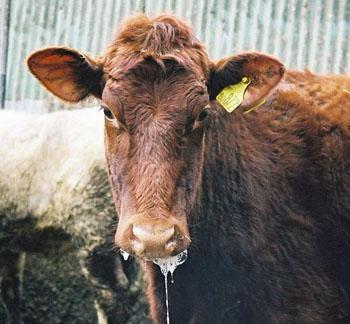
While favourable rainfall lifted crop output and strengthened economic performance in the second quarter of 2026, the confirmation of Foot and Mouth Disease (FMD) has highlighted the vulnerability of livestock businesses to animal health risks and export market disruptions.
The contrast raises a wider investment question: Does Namibia have the infrastructure, technology, financing and market systems to turn its agricultural potential into a competitive industry?
Figures released by the Namibia Statistics Agency (NSA) show that agriculture and forestry expanded by 17.8% in real value added during the second quarter, compared with a contraction of 2.7% in the corresponding period of 2025.
The sector contributed 0.8 percentage points to Namibia’s overall GDP growth of 4.8%, underscoring its economic importance.
Crop production was the main driver, expanding by 28.5% following increased maize and millet production. The NSA attributed the improvement to favourable rainfall.
Livestock production also recovered, growing by 7.2% after contracting by 28.4% in the second quarter of 2025. Cattle marketed to export abattoirs increased by 4.7%, while live cattle exports rose by 62%.
NSA National Accounts Economist Matheus Lazarus attributed the improvement to increased cattle marketed to export abattoirs.
“This is attributed to an increase in cattle marketed to export abattoirs,” Lazarus said.
However, the FMD outbreak, confirmed on 23 September 2026, has since changed the operating environment, exposing the risks of production growth without adequate investment in disease prevention, veterinary capacity and market resilience.
Growth versus resilience
The crop production figures highlight investment opportunities but also expose the sector’s dependence on rainfall.
Sustained growth requires investment in irrigation, water harvesting, drought-resistant seed varieties, mechanisation and modern farming technologies.
For commercial investors, this creates opportunities in agricultural inputs, irrigation equipment, grain storage, milling, food processing and logistics.
Improved post-harvest infrastructure could reduce losses, strengthen domestic food supplies and create opportunities for value addition rather than relying predominantly on unprocessed agricultural commodities.
The livestock industry faces a different but equally important challenge.
Minister of agriculture, fisheries, water and land reform Inge Zaamwani has acknowledged the disruption caused by FMD, particularly during the peak December livestock trading season.
“We are entering this season of December, which is a high peak season for trading in livestock. Now, we cannot do that. But we understand that we cannot do that,” Zaamwani told the local media on 5 November.
The restrictions have raised concerns about farmers’ cash flows, livestock movement, abattoir operations and access to international markets.
Leigh-Ann Nehoya, an agricultural economist at the Namibia Agricultural Union (NAU), estimates that a six-month disruption could result in approximately N$2.397 billion in cash losses across the livestock value chain.
“The projection includes potential losses affecting farmers, transporters, auctioneers, abattoirs and agricultural input suppliers.”
Beyond the immediate outbreak, the situation highlights the need for stronger veterinary infrastructure, laboratory capacity, animal identification, traceability and biosecurity systems.
These are not merely regulatory requirements. They are essential productive infrastructure for an export-oriented livestock industry.
Where investment is needed
The agricultural recovery creates opportunities for financial institutions and private investors to address longstanding gaps.
Farmers need financing to acquire inputs and equipment, improve water infrastructure, expand production and adopt technologies that reduce operating costs.
Financing products tailored to seasonal production cycles could ease working capital constraints, while equipment leasing and longer-term infrastructure financing could support commercial expansion.
There is also scope for greater private sector participation in storage, cold-chain logistics, processing facilities and distribution networks.
For livestock businesses, investment in disease surveillance and traceability could strengthen compliance with importing-country requirements and protect export relationships.
Market diversification is equally important. Expanding regional and international trading relationships could reduce dependence on a limited number of destinations, although access will remain subject to animal health and import requirements.
Turning potential into commercial growth
Namibia’s broader economy expanded by 4.8% in the second quarter of 2026, with nominal GDP increasing to N$70.6 billion from N$65.3 billion in the corresponding period of 2025.
Agriculture’s contribution is encouraging, but sustaining that performance will require investment beyond responding to favourable rainfall or recovering from disease outbreaks.
The sector needs stronger links between farmers, financial institutions, technology providers, processors and markets.
For investors, the opportunity is not limited to producing more crops or livestock. It lies in building the infrastructure and services that make agricultural production more predictable, commercially viable and competitive.
Namibia has demonstrated that its agricultural sector can rebound. The next challenge is translating improved production into sustained investment, greater value addition, stronger domestic supply chains and more resilient export earnings.