RINA HOUGH
The Foot-and-Mouth Disease (FMD) outbreak has placed the livestock industry of Namibia under considerable pressure, raising important questions about disease control, the recovery of international status, market access and the long-term sustainability of the sector.
For producers, it is important to understand not only what is happening now, but also what lies ahead and what the various processes mean for their farming businesses.
Our intention with this article is to address some of the most pressing questions facing producers, explain the technical processes in practical terms and provide factual information to help members better understand the challenges and decisions ahead.
While there are no quick fixes or guaranteed timelines, having a clear understanding of the situation is essential as we navigate this difficult period together.
The available information therefore indicates that the outbreak remains geographically limited.
However, further testing is essential before it can be established with confidence that the virus has not spread beyond the currently identified area.
Why is surveillance so important?
One of the most important requirements in managing an FMD outbreak is establishing the true extent of the disease. It is not sufficient to know where clinical cases have been reported.
Veterinary authorities must also establish whether the virus may have spread to other areas through animal movements, direct contact or other possible transmission routes.
This requires systematic surveillance, sampling, testing and the investigation of possible contact with infected animals or properties.
The results will help determine whether the disease is successfully contained within the affected area and whether the rest of the country can be demonstrated to be free from infection.
This information is also essential for Namibia’s eventual application to regain its international FMD status.
What is the role of vaccination?
Ring vaccination is an important disease-control tool during an outbreak. It helps reduce the susceptibility of animals to infection and can contribute to limiting the spread of the virus.
However, vaccination does not mean that the disease has been eradicated. Vaccinated animals must still be monitored, and veterinary authorities need to establish whether the virus is continuing to circulate.
This is why further vaccination, surveillance and testing remain important even after the first vaccination round has been completed.
Producers should also understand that vaccination requirements and protocols are determined by the veterinary authorities. Any changes to these requirements must be communicated officially.
Why can’t livestock movement restrictions simply be lifted?
This is understandably one of the biggest concerns among producers. Restrictions on livestock movements have serious financial consequences, particularly for farmers who depend on regular sales to maintain cash flow.
However, relaxing restrictions before the extent of the outbreak is properly understood could result in further spread of the virus.
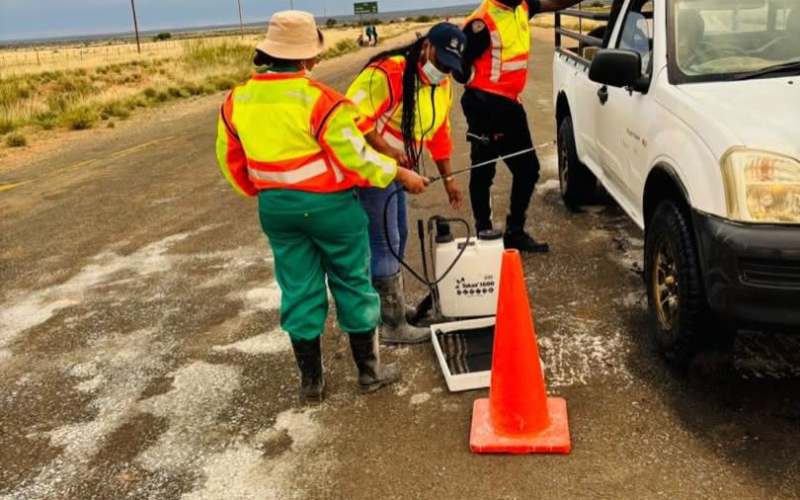
FMD can spread rapidly through the movement of infected animals and through contaminated equipment, vehicles and other materials.
Once the virus spreads to new areas, disease control becomes significantly more complicated.
Further spread could also delay Namibia’s efforts to regain its international disease status and restore access to important export markets.
What should producers be doing?
During this period, every producer has an important role to play in protecting the livestock industry.
Producers should:
• Strictly comply with all current DVS movement requirements.
• Avoid unnecessary movement of livestock.
• Maintain good biosecurity practices on their farms.
• Monitor animals for signs of disease and report any suspicions immediately to the
nearest state veterinarian.
• Cooperate with veterinary officials during inspections, sampling and surveillance
activities.
• Ensure that all livestock movements are properly authorised and documented.
Looking ahead
The immediate priority remains to contain the outbreak and establish, through scientific evidence, that the virus has not spread beyond the affected area.
The economic pressure on producers is real, and the industry understandably wants to return to normal trading conditions as soon as possible.
However, the success of the disease-control process will ultimately determine how quickly Namibia can move towards restoring its international status.
At the same time, it is critically important that efforts to restore market access begin in parallel with disease-control activities. These are two equally important, interconnected priorities that must be pursued simultaneously.
While the one focuses on containing the outbreak and establishing the evidence required for the recovery of disease status, the other must focus on identifying market opportunities, engaging potential trading partners and addressing the requirements for reopening markets.
Waiting until disease status has been restored before beginning market-related work could result in further delays for the industry.
*Rina Hough is commodities analyst for livestock at the Namibia Agricultural Union