Renthia Kaimbi
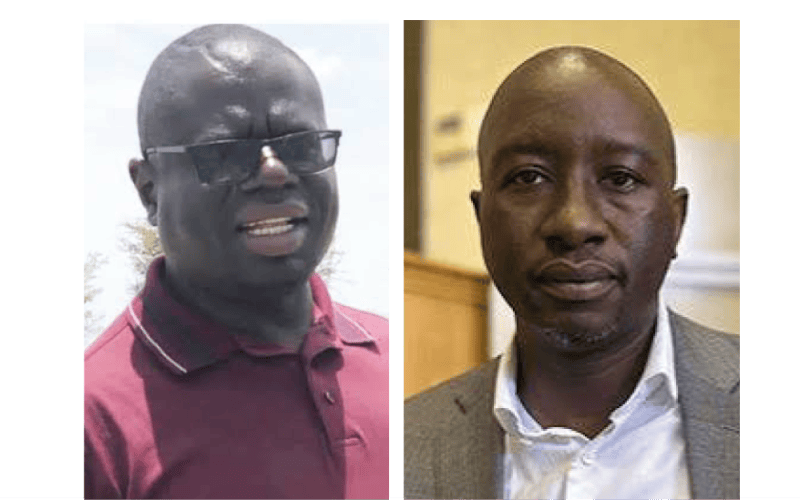
Former justice minister and Fishrot accused, Sackey Shanghala, has challenged the continued involvement of acting Prosecutor-General Martha Imalwa and deputy Prosecutor-General Edmund Marondedze in his prosecution, following an audio recording allegedly suggesting that the decision to prosecute him had been discussed before the Anti-Corruption Commission (ACC) submitted its investigation dockets.
In a letter dated 9 November 2026, addressed to Imalwa, Shanghala demands clarity on whether the State accepts that the principal voice in the widely circulated recording belongs to Marondedze, who is leading the prosecution against him, and whether the two officials intend to remain involved in the matter when the trial resumes on 18 January 2027.
Shanghala, who is allegedly representing himself, argues that if the recording is authentic, it raises serious questions about the origins of the prosecution and whether he can receive a fair trial while the officials allegedly implicated remain in control of decisions concerning his case.
The recording was reportedly posted to a WhatsApp group of prosecutors on 5 October 2026 before being deleted, with Marondedze denying that he was the speaker in an earlier report by the Windhoek Observer.
Shanghala says he received the recording a day after this newspaper’s report and subsequently arranged for it to be transcribed and translated from chiShona into English by NC Maischatz Transcription Services in Windhoek.
The transcription and translation were completed on 2 November.
He says he recognises Marondedze’s voice, having known him for years in both professional and personal capacities and having heard him address the Magistrate’s Court and High Court during proceedings against him over nearly seven years.
According to Shanghala, the voice, intonation and expressions used in the English portions of the recording belong to Marondedze.
The most concerning passages, he says, appear on pages nine and 10 of the translated transcript, where the speaker allegedly recounts a conversation with the Prosecutor-General in April 2019.
The speaker is quoted as saying that the Prosecutor-General had informed him that there was a case involving Shanghala and that he would prosecute him.
One passage reads: “Don’t worry Sackey, I will prosecute him,” while another allegedly captures the speaker saying: “PG said don’t worry about this guy, me I will prosecute him.”
Shanghala argues that these statements, if authentic, suggest that the decision to prosecute him had already been communicated to Marondedze in April 2019, raising questions about whether the prosecution was predetermined before the investigation was formally referred to the Prosecutor-General’s Office.
He points out that the ACC only forwarded the two investigation dockets forming the basis of criminal case CC 06/2021 to the Prosecutor-General’s Office through letters dated 1 December 2020 and 25 January 2021.
The dockets were referred in terms of section 31 of the Anti-Corruption Act, Act 8 of 2003, for a prosecutorial decision.
Shanghala says the timeline is particularly troubling because the alleged conversation predates both his arrest on 27 November 2019 and the formal submission of the investigation dockets by the ACC.
He argues that, if the account in the recording is accurate, the decision to prosecute him appears to have been discussed before the relevant investigation files were formally placed before the office constitutionally responsible for deciding whether criminal proceedings should be instituted.
“If the account they give is true, you and Mr Marondedze are, I respectfully submit, the last two officers who ought to take any further part in CC 06/2021,” he wrote.
He further argues that their continued involvement in decisions relating to the case while complaints against them are pending prejudices his position as an accused person.
Shanghala says he lodged complaints on 5 and 6 November concerning the conduct described in the recording with the Disciplinary Committee established under the Legal Practitioners Act, through the Law Society of Namibia, and with the Judicial Service Commission under the Judicial Service Commission Act.
He also confirmed that a police case had been reported to the Namibian Police.
However, he stresses that these complaints do not address the questions raised in his letter, arguing that only the Prosecutor-General’s office can explain the State’s position on the continuation of the prosecution.
Apart from demanding clarity on whether Marondedze and Imalwa will remain involved in the matter, Shanghala wants confirmation that steps have been taken to preserve the WhatsApp records relating to the recording.
This includes the deleted message, its associated data and, as far as the office can secure it, the device from which the recording was allegedly posted.
He also wants to know whether Marondedze has been questioned about the identity of the voice and, if so, what response he provided.
Shanghala says the evidence must be secured while it is still available, particularly because the trial is scheduled to resume in January and he needs to prepare for the proceedings knowing the State’s position.
He further invokes Article 12 of the Namibian Constitution, which guarantees the right to a fair trial, arguing that a prosecution allegedly initiated on the basis described in the recording would raise fundamental concerns about the fairness of the proceedings.
He also refers to Article 5, which obliges organs of government and their agencies to respect and uphold fundamental rights and freedoms.
“If the recording is authentic, a trial initiated by the Prosecutor-General on that footing, conducted by the prosecutor who gives that account, and directed by the person to whom he attributes those words, would not, I respectfully submit, be the fair trial to which Article 12 of the Namibian Constitution entitles me,” he wrote.
Shanghala, who has been in custody since 27 November 2019, has given Imalwa until Friday, 20 November 2026, to respond to his questions.
He wants the State to explain whether it intends to proceed with CC 06/2021 under the current circumstances and, if so, on what basis it believes the prosecution can fairly continue.
He warns that if he receives no response by the deadline, he will regard the State as having chosen not to answer his questions and will be entitled to raise that position wherever the issue arises.
Chief public relations officer at the ministry of justice and labour relations Edmund //Khoaseb had not responded to questions regarding the contents of the letter Shanghala wrote to Imalwa at the time of publication.