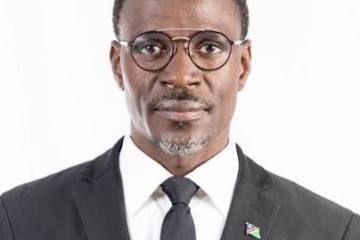
Nekundi calls for disability access in public infrastructure
Patience Makwele
Works and transport minister Veikko Nekundi has called for disability accessibility to be incorporated into public infrastructure planning, budgets, procurement and construction.
He warned that buildings designed without considering different needs can deny people access to essential services.
Nekundi, whose remarks were delivered by Jaffet Nelongo, deputy executive director in the ministry of works and transport, said infrastructure development must consider the people who will use it, including persons with disabilities.
“A technically impressive design is meaningless if it fails the end users,” he said.
He said accessibility must go beyond providing entrances, extending to how people access information, transport and public services.
“National development remains incomplete if our infrastructure cannot be used safely and with dignity by all citizens,” Nekundi said.
He used the example of a child who uses a wheelchair, saying that if a classroom is not designed to accommodate the child, access to education is denied.
Nekundi said the requirements of the proposed accessibility standard should be incorporated into budgets, procurement documents, construction supervision and building regulations.
He added that improving existing infrastructure could require a phased approach and resources, while stressing the importance of listening to persons with disabilities and ensuring the standard reflects Namibia’s realities.
Angelique Philander, chief executive officer of the National Disability Council of Namibia (NDCN), said inaccessible environments continue to affect the independence and participation of persons with disabilities.
She delivered a statement on behalf of the council’s board chairperson, describing how qualified people with disabilities can struggle to access workplaces and how others face barriers when seeking information or services from public institutions.
“These experiences demonstrate that inaccessible environments affect independence, participation, and the ability of persons with disabilities to contribute meaningfully to society,” the statement said.
Philander said access needs differ among people with visual, hearing, physical and intellectual disabilities, as well as between rural and urban communities.
“The principle of nothing about us, without us, remains particularly relevant to this process,” she said.
She said the council would continue contributing to the process and monitoring the implementation of disability-related policies and programmes.
Meanwhile, Namibian Standards Institution (NSI) executive for standards and commercial services, Paloma Ellitson, said work on the draft accessibility standard began in 2023, with consultations involving architects and a technical committee.
According to Ellitson, a national technical workshop was held in Otjiwarongo in 2024, after which feedback was incorporated into the draft.
She said the current workshop was intended to gather final input before the standard proceeds to the publication process.
The proposed standard covers accessibility in the built environment, infrastructure, transport and mobility, information and communication, assistive products, services and operations.
She said the review would help identify gaps, conflicting requirements and other issues that needed attention before the document proceeds to public inquiry.
NSI chief executive officer Dr Eino Mvula said feedback from earlier consultations had helped shape the draft, adding that the institution would provide technical coordination and capacity building to support its publication and implementation.
He said the standard’s value would depend on whether it translated into practical changes in public spaces and services.
“The real test lies in ensuring that these rules do not simply gather dust on shelves, but they come alive in every town council, in every construction site, and in every public office across our country,” Mvula said.
He said accessibility should be treated as a right rather than a favour.
“Accessibility is not a favour. It’s a fundamental human right.”
Deputy minister in the Office of the Vice-President Moses //Khumub, who officially opened the workshop on behalf of Vice President Lucia Witbooi, said the proposed standard should be technically sound, practical and relevant to Namibia.
He said accessibility should be considered in transport, information and communication technology, and public services, including digital platforms.
//Khumub said incorporating accessibility during the design stage could reduce the costs of making changes later.
He added that effective implementation would require clear institutional responsibilities, resources, technical capacity, monitoring and training.
He said the standard’s success would ultimately depend on whether its requirements were put into practice.
“While validating the standards is an important milestone, their ultimate value will depend on effective implementation.”Patience Makwele
Works and transport minister Veikko Nekundi has called for disability accessibility to be incorporated into public infrastructure planning, budgets, procurement and construction.
He warned that buildings designed without considering different needs can deny people access to essential services.
Nekundi, whose remarks were delivered by Jaffet Nelongo, deputy executive director in the ministry of works and transport, said infrastructure development must consider the people who will use it, including persons with disabilities.
“A technically impressive design is meaningless if it fails the end users,” he said.
He said accessibility must go beyond providing entrances, extending to how people access information, transport and public services.
“National development remains incomplete if our infrastructure cannot be used safely and with dignity by all citizens,” Nekundi said.
He used the example of a child who uses a wheelchair, saying that if a classroom is not designed to accommodate the child, access to education is denied.
Nekundi said the requirements of the proposed accessibility standard should be incorporated into budgets, procurement documents, construction supervision and building regulations.
He added that improving existing infrastructure could require a phased approach and resources, while stressing the importance of listening to persons with disabilities and ensuring the standard reflects Namibia’s realities.
Angelique Philander, chief executive officer of the National Disability Council of Namibia (NDCN), said inaccessible environments continue to affect the independence and participation of persons with disabilities.
She delivered a statement on behalf of the council’s board chairperson, describing how qualified people with disabilities can struggle to access workplaces and how others face barriers when seeking information or services from public institutions.
“These experiences demonstrate that inaccessible environments affect independence, participation, and the ability of persons with disabilities to contribute meaningfully to society,” the statement said.
Philander said access needs differ among people with visual, hearing, physical and intellectual disabilities, as well as between rural and urban communities.
“The principle of nothing about us, without us, remains particularly relevant to this process,” she said.
She said the council would continue contributing to the process and monitoring the implementation of disability-related policies and programmes.
Meanwhile, Namibian Standards Institution (NSI) executive for standards and commercial services, Paloma Ellitson, said work on the draft accessibility standard began in 2023, with consultations involving architects and a technical committee.
According to Ellitson, a national technical workshop was held in Otjiwarongo in 2024, after which feedback was incorporated into the draft.
She said the current workshop was intended to gather final input before the standard proceeds to the publication process.
The proposed standard covers accessibility in the built environment, infrastructure, transport and mobility, information and communication, assistive products, services and operations.
She said the review would help identify gaps, conflicting requirements and other issues that needed attention before the document proceeds to public inquiry.
NSI chief executive officer Dr Eino Mvula said feedback from earlier consultations had helped shape the draft, adding that the institution would provide technical coordination and capacity building to support its publication and implementation.
He said the standard’s value would depend on whether it translated into practical changes in public spaces and services.
“The real test lies in ensuring that these rules do not simply gather dust on shelves, but they come alive in every town council, in every construction site, and in every public office across our country,” Mvula said.
He said accessibility should be treated as a right rather than a favour.
“Accessibility is not a favour. It’s a fundamental human right.”
Deputy minister in the Office of the Vice-President Moses //Khumub, who officially opened the workshop on behalf of Vice President Lucia Witbooi, said the proposed standard should be technically sound, practical and relevant to Namibia.
He said accessibility should be considered in transport, information and communication technology, and public services, including digital platforms.
//Khumub said incorporating accessibility during the design stage could reduce the costs of making changes later.
He added that effective implementation would require clear institutional responsibilities, resources, technical capacity, monitoring and training.
He said the standard’s success would ultimately depend on whether its requirements were put into practice.
“While validating the standards is an important milestone, their ultimate value will depend on effective implementation.”