There is something almost deliberately intimidating about a national budget. Billions of Namibia dollars are announced in Parliament.
There are revenue projections, expenditure ceilings, fiscal deficits, debt ratios, development allocations, tax measures and three-year forecasts.
There are acronyms, percentages and tables that can make the ordinary citizen’s eyes glaze over.
Yet behind all those numbers lies a fairly simple question: How much money does the government have, where does it come from, where is it going, and what will Namibians get for it?
That is the real budget.
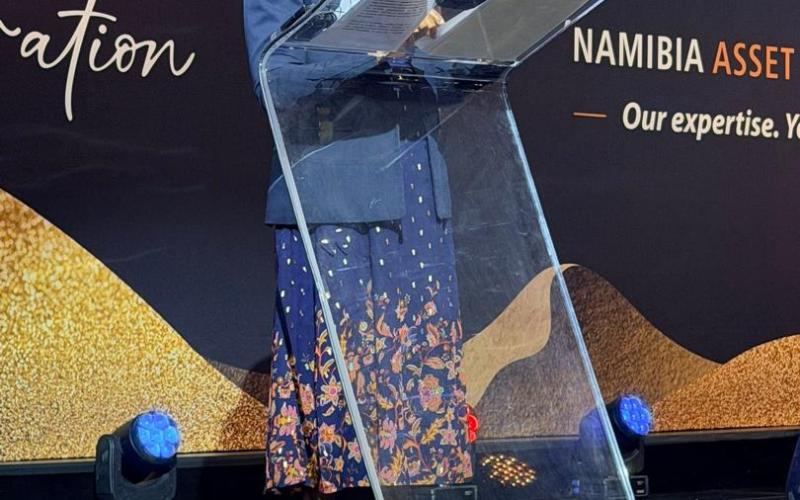
Minister of finance Ericah Shafudah’s mid-term budget review, tabled today, is therefore more than an opportunity to announce revised figures.
It is a progress report on the promises made when the 2026/27 budget was presented in February.
And this is where the pesky details matter.
The original 2026/27 budget envisaged total spending of about N$104.1 billion, against revenue of N$89.8 billion.
The difference has to be financed, principally through borrowing. The original framework also provided about N$81.3 billion for operational expenditure, while only N$6.5 billion was set aside for government-funded development projects, with another N$4 billion expected from loans and grants.
At first glance, N$104 billion sounds enormous.
But a national budget is not a bank account containing N$104 billion waiting to be spent. Much of it is already spoken for.
A useful way of understanding this year’s budget is to imagine every N$100 government spends. About N$38.50 goes towards salaries and wages.
Another N$28.70 is transferred to state-owned enterprises, local and regional authorities and individuals through social grants. About N$9.60 pays for goods and services required to keep the government operating.
That leaves only about N$7.60 for capital spending, roads, schools, clinics, water infrastructure and other assets intended to serve Namibians over the longer term.
And about N$15.60 of every N$100 goes towards interest and borrowing costs.
Suddenly, the N$104 billion looks rather different.
This is one of the great misunderstandings surrounding national budgets.
Citizens often hear that the government has allocated billions to a particular sector and reasonably ask: Where is the money?
The answer may be that much of the allocation is not actually available for new projects. It may be salaries. It may be transferred.
It may be debt service. It may be electricity, medicines, fuel, maintenance or other recurrent costs.
And then there is the difference between allocation and execution. This may be the most important detail of all. The government can allocate N$1 billion to build infrastructure.
That does not mean N$1 billion has been spent, or that a kilometre of road has been constructed, a school completed or a hospital upgraded.
Indeed, Shafudah herself has acknowledged that implementation is the problematic stage of the budget cycle.
Ahead of today’s review, she challenged ministries and agencies to account for how far they had progressed with their commitments.
The numbers emerging from the mid-term review illustrate the point. By September, the government had spent about N$47 billion of the N$87 billion appropriated, an execution rate of 53.5%.
That is why the mid-term budget is so important. It provides an opportunity to move beyond promises and ask what has actually happened.
It also reminds us that budgets are moving documents.
Last year’s budget, for example, projected total expenditure of N$106.3 billion for 2025/26.
Development expenditure was initially projected at N$12.8 billion, representing a significant increase from the previous year.
Yet the fiscal framework was already under pressure from a widening deficit and rising debt. Total debt was projected to reach N$172 billion, or 62% of GDP, while interest expenditure was expected to rise to N$13.7 billion.
Those numbers matter because today’s budget inherits yesterday’s decisions. Debt does not disappear when a new minister delivers a new budget speech. Nor do outstanding commitments. Nor does the cost of running the government.
In 2026/27, interest payments were initially expected to be about N$16.2 billion. That is money that cannot be spent on a new classroom, nurse, road or water pipeline because it is the price of borrowing undertaken over previous years.
Then there is revenue.
The government does not create money simply because Parliament approves a budget. It must collect it.
Much of that revenue comes from taxes, including income tax, corporate tax and VAT, while Southern African Customs Union receipts remain an important source of government income.
In February, SACU revenue was projected at N$24.3 billion for 2026/27. When revenue disappoints, something has to give: expenditure must be reduced, borrowing increased, or both.
That is why the mid-term review’s downward revision of revenue to N$88.1 billion is significant. The revised appropriation is proposed to rise to N$88.6 billion.
The pesky detail is that a budget deficit is not free money. Every additional borrowing decision creates a future obligation.
But the opposite is also true: cutting expenditure indiscriminately can have consequences for economic growth, employment and essential public services.
This is why budgets are ultimately exercises in choices and trade-offs. Namibia has also learned that external events can rapidly upset the neat assumptions contained in a budget.
Foot-and-mouth disease, drought risks, global conflicts and fuel-price pressures can create demands that were not sitting neatly inside the original spreadsheet.
Economists have warned that these pressures could require additional spending while revenue remains under pressure. So perhaps the best way for citizens to read a national budget is not to become economists overnight.
Ask five simple questions.
How much is coming in? How much is going out? How much is borrowed? How much is actually being spent? And what tangible result does the spending produce?
That last question may be the most important.
Free tertiary education, for example, is not simply an allocation on a spreadsheet.
It should ultimately be judged by access, completion rates, the quality of education and whether graduates acquire skills relevant to the economy.
Shafudah herself has argued that the government must examine the outcomes of such interventions rather than merely celebrating the allocation.
The same principle applies to roads, hospitals, schools, social grants and state-owned enterprises.
A budget is not successful because the minister can announce a large number.
It is successful when the money produces something of value. That is the inconvenient, unglamorous and sometimes downright pesky detail of national budgets.
The speech lasts a few hours.
The numbers last for years.
And ultimately, it is not the billions announced in Parliament that citizens should remember.
It is what those billions actually bought.