Sostenus Wilherm
The ministry of education, innovation, youth, sports, arts and culture is targeting the completion of 148 permanent classrooms and 66 pre-primary classrooms across all 14 regions before the 2027 academic year begins, as it moves to ease overcrowding and improve access to education.
Deputy minister Dino Ballotti announced the targets on Monday during the launch of the ministry’s 2025–2030 Strategic Plan in Windhoek, outlining a series of priorities aimed at addressing infrastructure shortages, strengthening teaching and learning, expanding digital connectivity and preparing young people for employment.
“Getting classrooms ready for 2027. We are building 148 permanent classrooms and 66 pre-primary classrooms across all 14 regions, and they must be ready before the 2027 academic year opens,” Ballotti said.
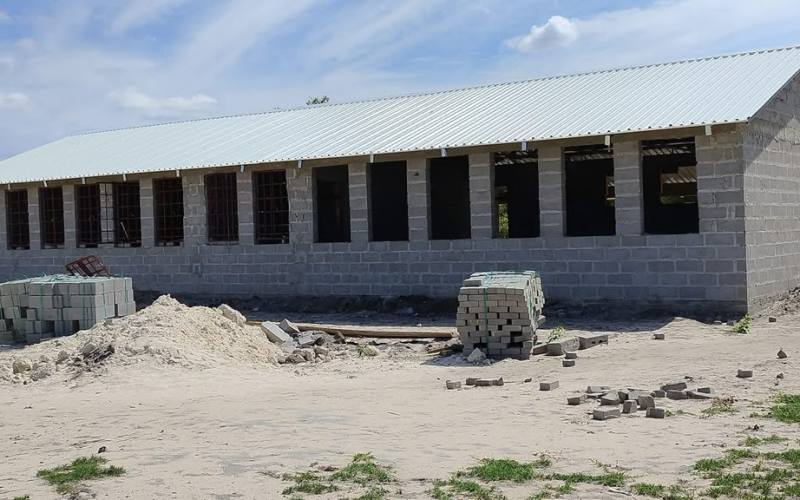
The ministry is also constructing 25 new schools in 10 regions to relieve pressure on overcrowded schools, particularly those with more than 2 500 learners. Ballotti said 22 of the new schools had already reached roof level.
He cautioned, however, that the construction programme should not be interpreted as meaning the country’s classroom shortages would be resolved immediately, pointing to limited resources and competing priorities.
“At no point are we saying that the classes and schools that are being built are sufficient,” he said, adding that the government had to prioritise projects within available resources.
The strategic plan is the first consolidated plan bringing together the mandates of the former ministry of basic education, arts and culture; the ministry of higher education, training and innovation; and the ministry of sport, youth and national service.
Ballotti said the merger was intended to create a coordinated approach to education, innovation, youth empowerment, sports, arts and culture.
“This is the first time, the classroom, the laboratory, the sports field, the stage and the studio sit under one roof and work towards one shared purpose,” he said.
The plan is built around eight pillars, including equitable access to quality education, excellence in teaching and learning, youth empowerment, sports development, arts and culture, infrastructure development, research and innovation, and good governance.
Ballotti acknowledged that the ministry continued to face funding gaps, dilapidated infrastructure, weak information and communication technology connectivity in some areas, disparities between rural and urban communities, and low learner retention and completion rates.
“We named these problems on purpose, as we cannot fix what we are not prepared to admit,” he said.
Despite the challenges, the deputy minister reported progress in several areas since implementation began in the 2025/26 financial year.
The Namibia School Feeding Programme reached 500 371 learners, exceeding its target of 497 749. Meanwhile, the Namibia Students Financial Assistance Fund received 41 322 applications in 2025 and awarded financial assistance to 30 223 students, surpassing its initial target of 22 500 beneficiaries.
Under the subsidised tertiary education funding model, 39 308 new-intake students received award letters for the 2026 academic year.
Technical and vocational education and training enrolment also increased from 23 870 to 26 875 trainees in 2025.
Ballotti said the Khorixas, Keetmanshoop and Nkurenkuru vocational training centres had been completed and were operational.
On teaching and learning, decodable readers for foundational literacy had been finalized in 11 languages, with the potential to reach more than 273 000 learners in Grades 1 to 3.
The ministry had also developed mathematics syllabus guides for pre-primary to Grade 3, potentially benefiting about 327 000 learners.
Digital education remains another priority, with the ministry planning to connect an additional 300 schools to the internet and finalise its National Digital Teaching and Learning Policy.
Ballotti said the ministry was also preparing for early childhood development functions to be transferred to it by 2028, while 150 additional pre-primary classrooms were already in procurement.
To strengthen the teaching profession, a bill to establish a professional regulatory authority for teachers is currently with the legal drafter.
Beyond education infrastructure, the plan seeks to address youth unemployment and skills shortages.
Ballotti said at least four vocational training centres would be upgraded into technical and vocational education colleges offering qualifications up to National Qualifications Framework Level 6.
He also highlighted plans to finalise the National Human Resources Development Strategy to address mismatches between available skills and the needs of the economy.
The ministry intends to introduce annual reporting, a mid-term review and a final evaluation to measure progress under the five-year plan.
Ballotti warned that limited budgets, land-related delays, procurement challenges and difficulties connecting remote schools remained risks to implementation.
He called on ministry officials, state-owned enterprises, statutory bodies, development partners, teachers, parents and communities to take responsibility for delivering the plan.
“A plan on paper does not implement itself,” he said.
He added that the success of the strategy would depend on cooperation and accountability, rather than the launch itself.
“Our Strategic Plan is now in place. And in the words of Her Excellency, my President our President, ‘Now… hard work,” Ballotti said.