Patience Makwele
The ministry of health and social services (MoHSS) has pledged to strengthen support for patients living with serious illnesses, including improving pain management, treatment referrals and psychological and nutritional support, as Namibia seeks to expand access to palliative care.
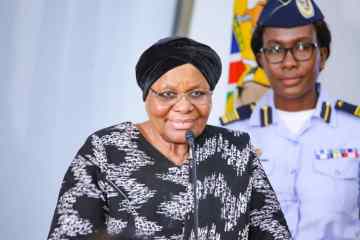
The commitments were outlined by deputy minister of health and social services Hambelelela Suzan Ndjaleka at the World Hospice and Palliative Care Day symposium in Windhoek on Friday, where she delivered a keynote address on behalf of minister Dr Esperance Luvindao.
Ndjaleka said the government’s responsibility to patients did not end when an illness progressed or treatment could no longer prevent the disease from advancing.
“When our preventative tools are not enough and women present with advanced disease, our duty to them does not end; it transforms,” she said.
She said the ministry was committed to expanding cancer screening, upgrading treatment and referral systems, and integrating nutritional and psychological support into home-based care.
However, the plans come as Windhoek Central Hospital (WHC) acknowledges that it does not yet have a formal palliative care department, with staff outlining a phased approach to developing specialist capacity and integrating services across hospital departments.
Dr John Abebrese, a researcher and surgeon at the hospital, said the first phase would focus on building a core of specialised, trained personnel, followed by the gradual integration of palliative care into general surgery, internal medicine, paediatric oncology, adult oncology and haematology.
“What we want to create is a focus of specialised, trained care, around which our whole structure for palliative care will fall,” he said.
Abebrese said the hospital already had an oncologist, one to two nurses trained in palliative oncology, a psychologist and counsellor, and a social worker undergoing palliative care training.
He also said two doctors had undertaken or were undertaking palliative care training through the University of Cape Town.
He did not provide a timeline for establishing the department or completing the proposed hospital-wide integration.
The Cancer Association of Namibia (CAN) announced in April that it had secured funding for palliative care and intended to support the development of services in public hospitals, starting with Windhoek Central Hospital.
Walvis Bay District Hospital and Oshakati Intermediate Hospital were identified for subsequent support.
CAN also said it would support the expansion of oncology services and the development of a dedicated palliative care programme at Oshakati.
Abebrese said expanding the service would require investment in training, which he described as costly and time-consuming.
He called for skills development to include community-based providers and organisations that already support patients, rather than being limited to public healthcare workers.
Namibia recorded an estimated 4 205 new cancer cases and 2 520 cancer deaths in 2024, according to the International Agency for Research on Cancer.
Cervical cancer accounted for an estimated 453 cases, or 19.2% of cancers among women.
At the symposium, counsellor Nazeema van Rooi of the Cancer Association of Namibia and Palliative Care Namibia said palliative care should address patients’ emotional and spiritual needs as well as their physical symptoms.
“Our role is not to decide whose spirituality is correct,” she said, explaining that support should respect each patient’s beliefs and values.
MoHSS’s strategic plan for 2025/26 to 2029/30 targets an increase in access to essential health services including preventive, curative, palliative and rehabilitative care from 63% to 75% by 2030.
The target covers the broader package of essential health services, not palliative care alone.
Ndjaleka said the goal was to ensure that patients were not left to endure pain and distress without appropriate support.
“Pain relief is not a luxury, it is a fundamental human right,” she said.