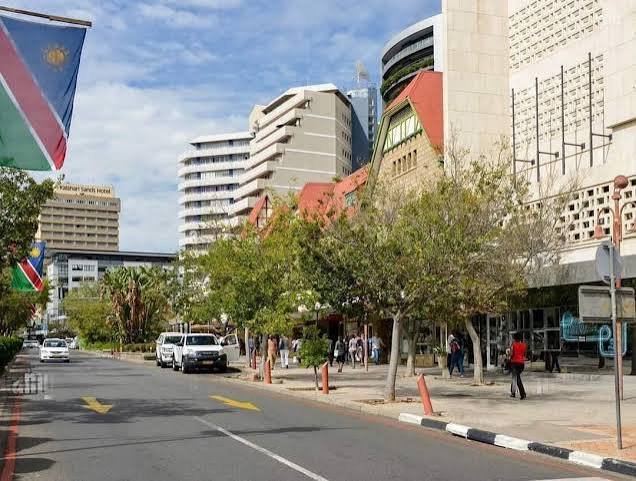
There was a time when cleanliness was not merely something Namibia aspired to. It was part of the country’s identity.
Windhoek was widely celebrated as the “cleanest city in Africa”, a reputation built over decades and reinforced by residents, businesses and successive municipal administrations.
The title eventually went to Kigali around 2015/16, but the loss was about more than an informal African crown. It represented the erosion of something Namibians had come to regard as part of who we were.
The question today is uncomfortable but necessary:how did we allow ourselves to become a dirtier country, and is this deterioration symptomatic of a wider decline in service delivery?
The answer cannot simply be that Namibians have become careless.
Littering and irresponsible dumping are undoubtedly part of the problem. But cleanliness is also a function of municipal planning, refuse collection, enforcement, infrastructure, public education and the ability of local authorities to consistently deliver basic services.
In other words, a dirty street can tell us something about both the person who dropped the rubbish and the system responsible for managing the environment in which that rubbish accumulates.
Former President Hage Geingob understood this distinction.
In May 2018, following a period in which Namibia had experienced outbreaks of diseases including cholera, Geingob launched the national “Namibia, Healthy and Clean” campaign.
The City of Windhoek records that he called on Namibians to clean their surroundings and urged the country to reclaim its position as Africa’s cleanest.
Thousands participated nationally, with waste removed from streets, riverbeds and open spaces.
It was an important intervention because it recognised that environmental cleanliness is ultimately a public-health issue.
A dirty environment is not simply unattractive. Poor waste management can contaminate water, create breeding grounds for disease vectors and increase exposure to health hazards.
Namibia’s own environmental institutions have repeatedly linked proper waste management to public health and sustainable development.
But campaigns alone cannot keep a country clean.
That is where the question of local government becomes unavoidable.
Local authorities are the frontline of service delivery. They are responsible for many of the services that citizens encounter every day: refuse collection, sanitation, roads, drainage and the management of public spaces.
Namibia’s National Solid Waste Management Strategy recognises the need for local authorities to monitor practical indicators such as the quantity of waste collected and disposed of, the number of households receiving collection services and the costs associated with waste management.
The relationship is therefore clear, although it should not be oversimplified: poorly managed local authorities can contribute significantly to declining cleanliness, but municipal failure is only one part of the equation.
Rapid urbanisation adds pressure. Informal settlements often lack adequate infrastructure. Population growth increases waste volumes. Household behaviour matters.
Businesses generate waste. Illegal dumping persists. And councils must operate within financial and administrative constraints.
Research into waste management in Windhoek has previously identified rapid urbanisation and limited municipal resources as contributing to the city’s waste-management challenges.
Yet there is reason for optimism.
This Saturday, September 19, Namibians will have an opportunity to demonstrate that the responsibility for a clean country does not belong exclusively to the government.
Dr La-Toya “Lioness” Mwoombola-Hamutenya is leading the Clean Up Namibia Celebrity Clean-Up Campaign at Okapale in Goreangab, bringing entertainers, public figures, community members and other stakeholders together for practical action.
This deserves more than applause. It deserves national support.
Lioness is doing something particularly powerful: she is using her star power in service of a public-interest cause.
That matters.
Celebrity activism is sometimes dismissed as publicity. But publicity is precisely what environmental cleanliness needs.
A public campaign that attracts attention can take an issue that people have become accustomed to seeing and make them look at it again.
In Lioness’s case, the message also carries another dimension. She is not only an acclaimed performing artist. She is a qualified medical doctor.
Her understanding of hygiene and environmental health therefore goes beyond aesthetics. She understands the relationship between the environment in which people live and their wellbeing.
As she has explained, the initiative grew from seeing how litter had become part of the everyday landscape.
Her response has been to turn that concern into a movement bringing public figures, schools, corporates and ordinary citizens together.
The campaign is explicitly framed not as an exercise in blaming government or citizens, but as shared responsibility.
That is precisely the spirit Namibia needs.
But Saturday cannot become another one-day spectacle.
The real test will be what happens on Sunday.
Can every constituency establish regular clean-up programmes? Can municipalities improve refuse collection? Can citizens stop treating open spaces as dumping grounds?
Can businesses take responsibility for the waste they generate? Can schools teach environmental responsibility as a habit rather than a once-a-year lesson? Can councils enforce existing bylaws consistently?
And can the government measure cleanliness as seriously as it measures other public-service outcomes?
Windhoek itself continues to acknowledge the importance of the challenge. In 2025, mayor Ndeshihafela Larandja reiterated the municipality’s commitment to reclaiming the city’s “Cleanest City in Africa” status.
That aspiration should become a national project.
Namibia does not need to manufacture a new identity. We need to recover one that we once took pride in.
The path back will not be paved by slogans or occasional campaigns. It will require reliable municipal services, proper infrastructure, enforcement, environmental education, responsible citizens and sustained political and community leadership.
Most importantly, it will require a change in attitude.
A clean Namibia cannot be something the government does to citizens. Nor can it be something citizens demand from the government.
It has to be something we build together.
That is why Lioness’s initiative deserves our support. She is reminding us that patriotism is not only about flags, anthems and national celebrations.
Sometimes patriotism is picking up a piece of rubbish that does not belong to you.
Sometimes it is refusing to throw one down.
And sometimes it is using whatever influence you possess to persuade others to do the same.
If Namibia genuinely wants to reclaim its reputation for cleanliness, the question is not whether we can organise another clean-up.
We can.
The question is whether we can turn the clean-up into a culture.
That is how Namibia can begin the journey back to number one.