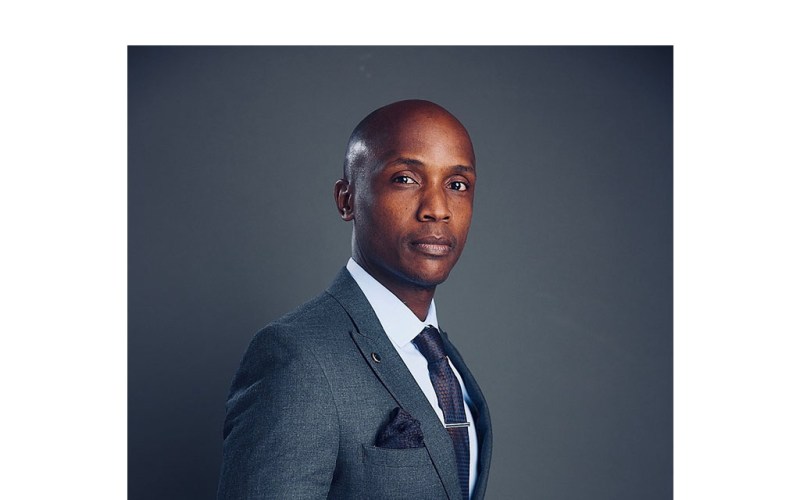
Mufaro Nesongano
Leadership is ultimately tested not by how long a person remains in office, but by what remains when that person leaves.
That test is visible in three seemingly different stories. The first is Apple’s planned leadership transition from Tim Cook to John Ternus after Cook’s 15-year tenure as chief executive officer.
The second is the leadership legacy of Lee Kuan Yew (1923–2015), Singapore’s first Prime Minister and founding father of modern Singapore.
The third is the continuing debate about the tenure of CEOs and managing directors in Namibia. Taken together, these examples show that leadership is not merely about vision, authority or achievement.
It is about building institutions, preparing successors and leaving behind systems strong enough to endure beyond one individual.
Cook’s record demonstrates the power of disciplined succession. Apple’s market value was about US$347 billion when he became CEO, and by the time of the planned transition it had grown to more than US$4 trillion.
Apple’s annual revenue also rose from about US$108 billion in fiscal 2011 to about US$416 billion in fiscal 2025.
Under Cook, Apple expanded beyond the iPhone into major product categories such as Apple Watch, AirPods and Vision Pro, while strengthening its services business. The lesson is clear.
Successors do not have to replicate founders to be effective. Some leaders create the original vision; others build the systems, scale and resilience that allow that vision to survive.
Lee’s achievement was not only that he imagined a future that did not yet exist; it was that he built the institutions, discipline and leadership pipeline required to pursue it.
He stepped down in 1990 and was succeeded by Goh Chok Tong, who led Singapore through globalisation, economic restructuring, the Asian Financial Crisis and the SARS outbreak.
After 14 years, he handed over to Lee Hsien Loong, reinforcing Singapore’s carefully managed tradition of orderly succession. The leadership lesson is unmistakable. Great leaders do not only build institutions; they build continuity.
This matters for Namibia because leadership tenure remains a central question in many public institutions and state-owned enterprises.
CEOs and managing directors are often appointed for fixed terms, commonly around five years. The more important question is whether a leader understands the assignment.
Are you the visionary who defines the direction? Are you the builder who converts strategy into systems and results?
Are you the stabiliser who strengthens what already exists? Or are you the leader whose greatest contribution is to prepare the next person to take the institution further?
A five-year term can be sufficient if a leader enters office with a clear mandate, builds capable teams, confronts difficult decisions early and creates continuity beyond personal authority.
It will never be enough if the leader spends most of the term trying to understand the organisation, avoiding hard choices or protecting position rather than building capacity.
The strongest leaders understand that leadership is not ownership. It is stewardship.
The conclusion is therefore unavoidable. Apple, Singapore and Namibia’s public-sector leadership debate all point to one enduring truth.
Leadership must be judged not only by performance during tenure, but by resilience after departure. Steve Jobs imagined products that changed industries. Tim Cook scaled Apple and prepared a successor.
Lee Kuan Yew built the foundations of modern Singapore, while Goh Chok Tong showed that succession can preserve stability while allowing a new leadership style to emerge.
For any leader, the final measure is not how firmly power is held, but whether the institution is stronger when power is handed over. The real leadership test is not what you control today. It is what remains standing after you leave.
*Mufaro Nesongano is a communications strategist and leadership commentator with more than 20 years’ experience in media, public relations and institutional reputation.