Renthia Kaimbi
The burial of liberation struggle veteran and former Robben Island political prisoner Helao Joseph Shityuwete has reignited debate over how Namibia recognised its liberation heroes, with political commentator Ben Mulongeni arguing that his decades of sacrifice warranted the country’s highest honour.
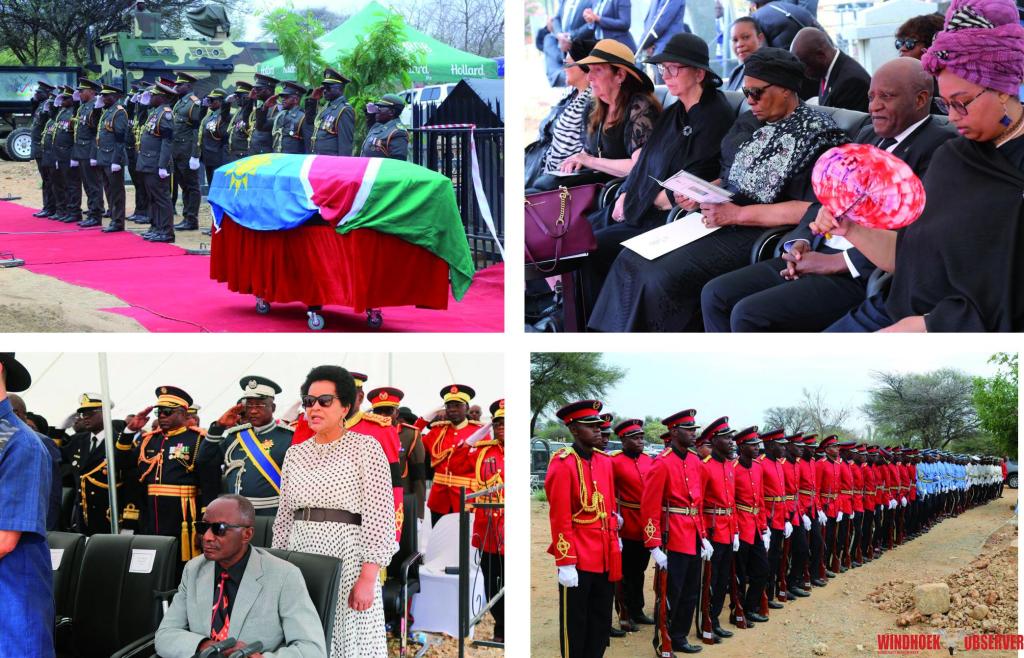
Shityuwete was accorded a state funeral and buried at the Pioneer’s Park cemetery on Sunday, following his death on 28 August 2026.
His passing prompted calls for him to have been laid to rest at Heroes’ Acre and accorded national hero status, with supporters pointing to his role in the liberation struggle and the 18 years he spent imprisoned on Robben Island.
The calls were based on the argument that Shityuwete’s contribution to Namibia’s independence went beyond political participation, as he had personally endured imprisonment and sacrificed years of his life in the struggle against colonialism and apartheid.
Shityuwete was involved in the political mobilisation of Namibian workers during the colonial period and helped establish the Walvis Bay branch of the Ovamboland People’s Organisation. He later became involved in the armed liberation struggle.
In 1966, he was part of the PLAN G2 group that entered Namibia to help prepare the ground for the armed struggle. He was subsequently captured and imprisoned by the apartheid authorities.
Shityuwete was convicted under the apartheid regime’s Terrorism Act and spent 18 years on Robben Island, where he was among 37 Namibian nationalists imprisoned there during the 1960s, including the late Andimba Toivo ya Toivo.
Mulongeni said Shityuwete’s Robben Island imprisonment placed his contribution in a category that, in his view, distinguished him from politicians who did not directly participate in the armed struggle.
“I do agree with those who are saying that a freedom fighter of that magnitude like Shityuwete, should have been laid to rest at the Heroes’ Acre, not only because of his fight but for his sacrifice for Namibia’s freedom. Just like Mandela and any other Robben Island prisoner,” he said.
“There’s a difference between a politician and a freedom fighter. Robben Island was the top level of prisons where the most feared fighters and most notorious Apartheid government overthrowers were kept,” he said.
Shityuwete was released in 1984 after 18 years in prison. Following his release, he pursued further education in Britain before returning to Namibia during the transition to independence.
After independence, he served in the ministry of labour, where he contributed to the development of the country’s labour administration. He also devoted attention to preserving the history and welfare of former Robben Island political prisoners.
He later documented his experiences in his autobiography, Never Follow the Wolf, providing a personal account of his involvement in the liberation struggle, his capture and his years of imprisonment.
Supporters of a Heroes’ Acre burial argued that his life represented several defining chapters in Namibia’s history, from colonial rule and the liberation struggle to political imprisonment, independence and the post-independence era.
Mulongeni questioned whether the significance of Shityuwete’s Robben Island experience could adequately be determined through a committee process.
“A prisoner of Robben Island did not need a committee to sit. Now you understand that they (committee members) don’t understand the level of his heroism,” he said.
“Nobody in that committee or any committee in Namibia qualifies to decide where Shityuwete needed to be buried,” Mulongeni told the Windhoek Observer on Sunday.
The debate also raised questions about the purpose and meaning of Heroes’ Acre and whether national recognition should be based primarily on political office or on the sacrifices individuals made during the liberation struggle.
Mulongeni said Heroes’ Acre had risked losing some of its significance if political prominence was allowed to overshadow the sacrifices made by freedom fighters.
“Heroes’ Acre is not for politicians who have not even carried a gun or have even been shot at. It’s losing its value,” he said.
The calls for greater recognition came shortly after Namibia commemorated Heroes’ Day, when the country honoured those who sacrificed their lives and freedom during the liberation struggle.
Shityuwete’s death also highlighted the dwindling number of Namibian liberation veterans who personally experienced political imprisonment and the struggle for independence.
Those who supported his Heroes’ Acre burial argued that placing him among the country’s recognised heroes would have provided future generations with a physical reminder of the sacrifices made to secure Namibia’s independence.
However, Shityuwete was ultimately laid to rest at the Pioneer’s Park cemetery following the state funeral accorded to him by the government.
Mulongeni warned that failing to recognise liberation veterans at the appropriate time could result in their families having to revisit the issue after their deaths.
“If another president recognises and thinks he deserves to be buried at the Heroes’ Acre, he will be exhumed and reburied, like they did the others on Heroes’ Day. But why do we have to put the families of these heroes through that?,” he questioned.
The debate surrounding Shityuwete’s final resting place ultimately extended beyond his individual legacy, raising broader questions about how Namibia defined heroism and preserved the memory of those who sacrificed for independence.
His life had encompassed political mobilisation, armed resistance, imprisonment, labour advocacy, writing and the preservation of liberation history.
For those who had called for his burial at Heroes’ Acre, those experiences represented an extraordinary contribution to the country and demonstrated the personal cost paid by an earlier generation for Namibia’s freedom.