Staff Writer
The Namibia Investment Promotion and Development Board (NIPDB) has called for a stronger pipeline of bankable and investment-ready green industrial projects as Namibia seeks to translate its renewable energy and mineral resources into productive industries, jobs and economic growth.
NIPDB acting chief executive officer, Julia Muetudhana said the country’s green industrialisation ambitions would depend not only on its resource endowment, but also on investment, technology, infrastructure, skills, market access and effective project execution.
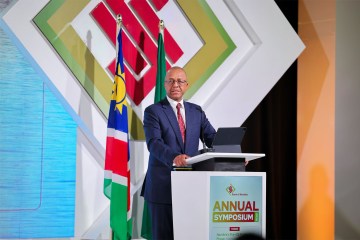
Speaking at the Africa Green Industries Summit 2026 in Swakopmund on Wednesday, Muetudhana said Africa had significant renewable-energy potential, critical minerals, emerging industrial markets and a growing entrepreneurial base, but that these advantages would only generate meaningful development if they were connected to investment and productive capacity.
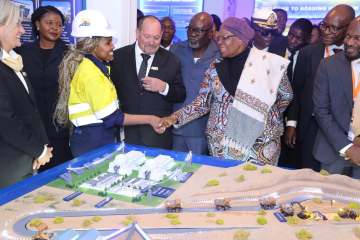
At the forum, 10 selected green-industry projects from different regions of Namibia were presented to potential investors and financiers.
She said the projects provided an indication of Namibia’s growing investment pipeline and its ambition to develop an industrialised, globally competitive and environmentally sustainable economy. However, the official cautioned that having a project was only the beginning.
Projects need to be commercially viable, properly prepared and based on genuine market demand, while clearly identifying the capital, technology and partnerships required, the official said.
NIPDB said project developers also needed to demonstrate how proposed investments would create sustainable value for investors, communities and the broader economy.
She identified three priorities for advancing green industrialisation including developing more bankable projects, building strategic partnerships that bring more than capital, and moving decisively from dialogue to implementation.
According to NIPDB, many promising projects across Africa remain at the concept stage because they lack sufficient preparation to attract investment.
The gaps can include incomplete feasibility studies, limited market analysis, unclear revenue models, inadequate environmental and social assessments, weak project-governance structures and the absence of suitable financing strategies.
Muetudhana said Namibia needs strategic partners that can combine capital with technology, engineering expertise, operational experience, skills development, research capabilities and access to regional and international markets. She said renewable-energy generation needed to be connected to industrial demand, while mineral production should be linked to processing, beneficiation and manufacturing.
Green hydrogen and its derivatives would similarly require supporting infrastructure, logistics, water solutions, technical capabilities and reliable market access.
“No single institution or company can build these value chains alone,” she said.
She added that the green industrialisation should also be inclusive, with opportunities extending to local enterprises, young professionals, women-owned businesses and communities.
Muetudhana said Namibia’s green industrialisation opportunities extended across renewable energy, green hydrogen, critical minerals, beneficiation, manufacturing, agriculture, logistics, infrastructure, technology and related services.