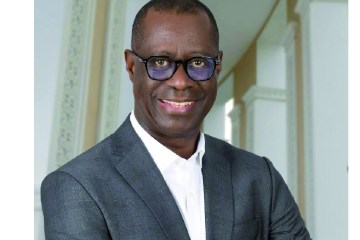
As a Namibian entrepreneur, I welcome the 2026 National Fisheries Indaba and, particularly, the strategic direction articulated by President Netumbo Nandi-Ndaitwah. There is value in bringing government, industry, workers, communities, financiers and other stakeholders into one room to confront the future of one of Namibia’s most important economic sectors.
But there is another question we should ask, without fear of sounding cynical: what happens after the Indaba?
Namibia has become remarkably good at convening conferences, summits, dialogues and indabas. We produce declarations, make commitments, identify challenges and agree that something must be done. The harder part has always been converting consensus into implementation.
That is why the real test of this Fisheries Indaba will not be the quality of the speeches delivered, or even the number of people who attended. It will be what changes in the fisheries sector six, 12 or 24 months from now.
If nothing changes, then we must honestly ask whether the Indaba was necessary in the first place.
President Nandi-Ndaitwah’s remarks provide a useful framework. She correctly identified fisheries as a vital and strategic pillar of the national economy and called for the sector to extend its economic reach. This is important because Namibia’s fishing industry cannot simply be judged by the value of fish landed or exported. The more fundamental question is how much economic value Namibia captures from its own marine resources.
Our ocean is a national asset. Fishing quotas are therefore not ordinary commercial licences. They provide access to a publicly owned resource. That access should carry a corresponding public obligation.
The President’s call for greater local landing of catches is particularly significant. Landing fish in Namibia, processing it here, packaging it here, transporting it through Namibian businesses and developing supporting industries creates a very different economic multiplier from simply harvesting fish and sending them elsewhere.
The distinction is between selling a resource and building an economy around a resource.
I say this not merely as an observer, but as an entrepreneur who has tried to demonstrate what this can mean in practice.
Roughly eight years ago, at Paragon Seafood Products, we deliberately converted our wet and freezer quotas into developing local, value-added consumer products. We produced a 1kg frozen consumer pack and canned horse mackerel under a distinctly Namibian brand, Tjao Fish, specifically for the domestic market.
But we wanted to go further than producing a Namibian product.
We wanted to produce Namibian entrepreneurs.
We developed a youth enterprise model in which young Namibians were provided with branded, large display freezers on loan and supplied with consumer-ready frozen and canned fish to establish their own fish-trading businesses. We delivered the fish to them free of charge and handled the marketing free of charge.
The objective was simple: create an entry point and platform to develop young Namibian entrepreneurs.
This experience taught me something important about the phrase “enterprise development”.
Enterprise development means creating conditions in which a young Namibian can own an asset, sell a product, build a customer base, generate income and eventually employ someone else.
This is not a utopian theory. We have a local blueprint.
Imagine if a model such as this were deliberately scaled across the fisheries industry, with government providing the right policy environment and financial institutions developing appropriate funding mechanisms. The cumulative effect could be enormous.
Thousands of young Namibians need not necessarily be employed by fishing companies. They could become distributors, processors, retailers, logistics operators, cold-chain entrepreneurs, aquaculture operators, technology providers and owners of businesses servicing the fisheries value chain.
That is the economic multiplier Namibia should be pursuing.
But there is a painful irony in our own experience.
The Tjao model demonstrated what was possible. Yet the brand was, in effect, killed by the gradual and systematic reduction of quota allocation to our company.
As our access to fish diminished, so did our ability to manufacture and supply the products. And when the supply disappeared, so did the businesses that had been built around it.
More than 180 young entrepreneurs who had been selling Tjao products directly into informal markets were affected by the quota reductions. They lost not only access to a product, but businesses and sources of income they had built around that product.
This is an important lesson for policymakers.
It is not enough to ask how many jobs a quota holder creates directly. We must also ask how many businesses exist because that quota exists.
A quota can support a factory, but it can also support a distributor. A retailer. A transporter. A cold-storage operator. A young entrepreneur selling fish in an informal market. The economic footprint of fisheries is therefore potentially far larger than the companies that appear on quota allocation lists.
When policy decisions undermine the supply chains that support these businesses, the consequences are multiplied.
This is where I believe there is currently a troubling misalignment between our indabas, conferences and policies on the one hand, and the lived experiences of Namibian entrepreneurs on the other.
We often speak about beneficiation, industrialisation, youth empowerment and enterprise development in grand language. Yet the entrepreneur on the ground encounters financing barriers, procurement barriers, regulatory obstacles, inadequate infrastructure and institutions that sometimes seem designed to administer programmes rather than create businesses.
The President’s call for financial institutions to make capital more accessible is therefore crucial. But capital must reach commercially viable ideas, not simply programmes. Government should also be prepared to partner with businesses that have already demonstrated workable models.
The most consequential remarks at the Indaba, however, may have been those concerning honesty, transparency and accountability.
If access to Namibia’s marine resources is a privilege carrying responsibilities, then quota allocation cannot be treated as a static entitlement. The country should continuously ask: What has the holder actually contributed to Namibia?
Has the company landed fish locally? How many sustainable jobs has it created? How much processing takes place in Namibia? What is the level of domestic value addition? How much is spent on Namibian suppliers? Are young Namibians being trained, and, more importantly, are they being enabled to establish their own businesses? Is the company compliant with labour, environmental and fisheries regulations?
These should not be political questions. They should be measurable performance indicators.
The President’s call for government to rigorously assess performance and compliance when allocating quotas therefore deserves serious attention. If implemented properly, it could transform the quota system from simply being a mechanism for distributing access into an instrument of national economic development.
But we must also be careful.
Fisheries policy should not become another vehicle for political patronage, nor should “Namibianisation” become a slogan used to justify poorly performing enterprises. Namibia needs a fisheries industry that is both nationally beneficial and commercially viable.
The objective should not be to punish successful businesses because they are successful. It should be to ensure that success is increasingly connected to Namibia’s broader economic interests.
This is why the Indaba must now move from conversation to measurable outcomes.
Government should emerge with clearly defined commitments, responsible institutions, deadlines and public reporting. If local landing is a priority, publish targets. If value addition is the objective, measure domestic processing capacity. If youth participation matters, quantify not only jobs created but businesses established and assets transferred. If transparency is the objective, strengthen disclosure around quota allocation and performance.
And perhaps most importantly, government should publish a Fisheries Performance Scorecard annually.
Then Namibians can see who is delivering and who is not.
An Indaba should be a beginning, not an endpoint.
Namibia’s fisheries sector is too important to become trapped in an endless cycle of meetings about meetings. It represents natural wealth that belongs, ultimately, to the Namibian people. The responsibility of government is to regulate it fairly and transparently. The responsibility of industry is to create value, employment and sustainable businesses. The responsibility of entrepreneurs is to seize opportunities and build enterprises capable of competing.
The President has set an important direction.
Now comes the difficult part: turning policy into enterprise, quotas into value, and young Namibians from beneficiaries into owners.
The fish are already in the ocean. The opportunity is already there. What Namibia needs now is to ensure that the value does not swim away with them