Staff Reporter
For more than five decades, the families of two Namibian liberation heroes lived with the pain of knowing that their loved ones had died far from home.
For more than a century, the remains of dozens of Namibians were held in South African museum collections, removed from their communities during the colonial era and subjected to practices that sought to classify indigenous people through the distorted lens of racial science.
This week, both chapters moved closer to closure.
Namibia has received the remains of 86 Namibians from South Africa, comprising 84 ancestral human remains and the mortal remains of liberation heroes Festus Nehale and Simon Petrus Niilenge, in what the government has described as a historic act of restoration, dignity and national healing.
The remains arrived in Namibia on Friday, 21 August, following a solemn repatriation ceremony at the Iziko South African Museum in Cape Town on 19 August.
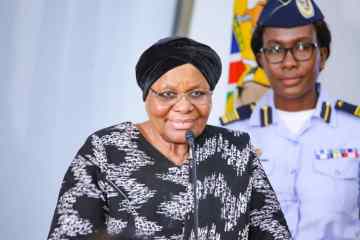
President Netumbo Nandi-Ndaitwah, who received the remains in Namibia, described the occasion as one of profound national reflection and pride.
“The promise has been kept. Our nationals have returned to the warm soil of the country for whose freedom they gave their lives,” she said.
The President said the homecoming represented an important step in confronting Namibia’s painful history.
“No ceremony can return the years that were lost, nor can words erase the pain you have endured,” Nandi-Ndaitwah said, while stressing that the return reaffirmed that the sacrifices of Namibians had not been forgotten and that their place in the country’s history remained enduring.
The repatriation is particularly significant because of the different histories represented by the 86 remains.
Nehale and Niilenge were political prisoners on Robben Island, where they were detained during apartheid. Their remains were buried in Cape Town after their deaths and were subsequently exhumed for return to Namibia. The two will be accorded a state reburial at Heroes’ Acre on 24 August, with their tombstones to be unveiled on Heroes’ Day, 26 August.
The other 84 remains tell a much older story of colonial exploitation.
According to South African authorities, the remains entered museum collections more than 100 years ago in the context of racial and pseudo-scientific research. They were treated as objects for scientific examination rather than as human beings belonging to families and communities.
Marvin Mdhluli, chairperson of the Council of Iziko Museums of South Africa, acknowledged the disturbing history, saying the remains entered South African museums as “objects of race-based pseudo-scientific research” intended to portray indigenous communities as inferior.
The remains represent several Namibian communities, including Aawambo, Ovaherero, Ovahimba, Nama, Damara and San. The repatriation also included body casts, grave goods and cultural materials, including beads, ostrich eggs and jewellery linked to Namibian communities.
For South Africa, the handover represents an acknowledgement of the responsibilities that come with confronting the legacy of colonialism and apartheid.
South African minister of sport, arts and culture Gayton McKenzie, who represented President Cyril Ramaphosa at the Cape Town ceremony, said the South African government had been tasked with accelerating the repatriation of liberation heroes and human remains collected unethically.
“They’ve never been free, but today they’re going home. They are free, and Namibia is free because they were locked up,” McKenzie said of the returning liberation heroes.
He described the return as a restoration of dignity and identity to the deceased, their families and communities.
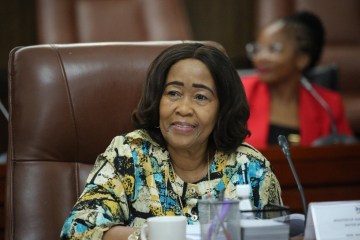
Namibia’s minister of education, innovation, youth, sport, arts and culture Sanet Steenkamp, who led the Namibian delegation to South Africa, said the process should not be understood simply as the movement of objects across an international border.
“We do not see this, as a country, as simply a transfer of remains and heritage materials from one country to another. To us … this is a homecoming,” Steenkamp said.
She said the process was rooted in a commitment by Namibia and South Africa to confront the unresolved consequences of their shared history.
Steenkamp also acknowledged the deeply human dimension of the repatriation, particularly for families who have carried the uncertainty and pain of separation for generations.
The Namibian government delegation was headed by Manfred Gaeb, who described the homecoming as the closing of a painful historical chapter.
“It brings closure to a chapter that was opened from childhood,” Gaeb said.
Nandi-Ndaitwah also used the occasion to acknowledge Ramaphosa, expressing gratitude for his leadership and commitment to making the homecoming possible.
“The return of our fallen heroes is also a powerful reminder of the enduring bonds of solidarity, shared history, and cooperation between our two nations and people,” she said.
The repatriation follows renewed cooperation between Namibia and South Africa after a Robben Island reunion in September 2025, which helped strengthen efforts to locate and return the remains.
The 84 ancestral remains will remain temporarily under the care of Namibia’s ministry of education, innovation, youth, sport, arts and culture while consultations and preparations for their final disposition continue.
The government has indicated that traditional authorities, families and heritage specialists will have an important role in determining the appropriate next steps.
The significance of the homecoming therefore extends beyond the ceremonies planned for Heroes’ Day.
For Namibia, the return of the 86 is a reminder that liberation is not only measured by political independence.
It is also about recovering identity, restoring dignity and bringing home those whose lives and remains were separated from the land and communities to which they belonged.
After decades of separation, the dead have finally come