Allexer Namundjembo
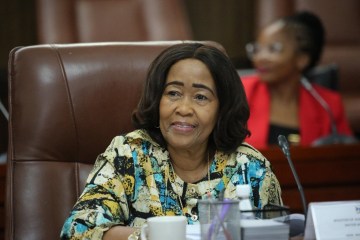
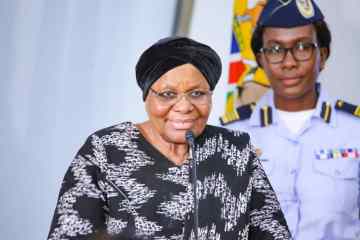
Minister of education, innovation, youth, sport, arts and culture Sanet Steenkamp says the provision of water to schools is primarily a rural development responsibility that should be addressed through regional councils, although her ministry continues to intervene where possible.
Speaking to the Windhoek Observer on Monday, Steenkamp said the ministry has assumed part of the responsibility because schools fall under its mandate, but stressed that rural water supply should ultimately be responsible for ensuring schools have access to water.
“The provision of water is, in essence, a rural development issue and must be discussed under the regional council. Education has taken over the role because schools are directly under the ministry,” she said.
Steenkamp said the ministry has undertaken interventions such as drilling boreholes and connecting schools to community water infrastructure where feasible.
“Where feasible we drill boreholes and we do the connection of water with communities. However, rural water supply, in essence, should take over the responsibility of providing water to schools,” she said.
She added that in regions where permanent water infrastructure remains a challenge, the ministry has invested in water tankers.
“There are specifically some regions such as Oshikoto where the ministry has invested in water tankers. The water tankers are filled with water and they go to schools that have water tanks,” she said.
According to Steenkamp, the Oshikoto Region currently has one ministry-funded water tanker, but similar investments should be made nationwide.
“Ideally every region should invest in water tankers. We have invested in one in Oshikoto. There are efforts, and the regional directors should be providing these answers as they are the ones decentralised,” she said.
Her comments come after the National African Students’ Association (NASA) called for urgent government intervention to address persistent water shortages at Satotwa Primary School in the Kavango West Region and Otjozondu Primary School in the Otjozondjupa Region.
In a statement issued on Friday, NASA’s National Secretary for Academics, Sports, Arts and Culture, Abel Miguel, said the continued lack of access to clean and reliable water at the two schools compromises learners’ health, dignity, concentration, and academic performance.
“Access to clean and reliable water is a basic human right and an essential requirement for quality education. It is unacceptable that learners continue to attend school under conditions where access to safe drinking water and proper sanitation is inadequate,” Miguel said.
NASA urged Steenkamp to work with relevant ministries, regional authorities, and other stakeholders to implement sustainable water solutions at the affected schools without further delay.
The student body also called on the government to conduct a nationwide assessment of schools facing similar challenges and to prioritise investment in water infrastructure.
“Education cannot flourish where basic necessities are absent. Every child, regardless of their geographical location, deserves to learn in a safe, healthy, and supportive environment,” Miguel said.
NASA said it remains committed to engaging constructively with government and other stakeholders to ensure the issue receives urgent attention.