Justicia Shipena
The Benguela Current Convention (BCC) has approved a new regional strategic action plan aimed at strengthening marine protection, tackling illegal fishing and promoting a sustainable blue economy across Angola, Namibia and South Africa.
The decision was taken during the 7th BCC Ministerial Conference held in Luanda on 13 May.
The conference brought together ministers, senior government officials, ambassadors, technical experts and international organisations involved in fisheries, transport, mining, oil and gas, environmental management and ocean governance.
During the meeting, Namibia handed over the chairpersonship of the BCC Ministerial Conference to Angola.
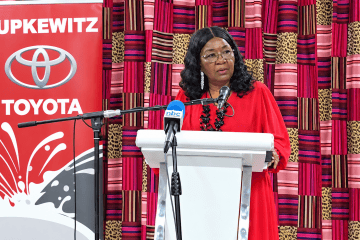
Namibia’s agriculture, fisheries, water and land reform minister, Inge Zaamwani, transferred leadership to Angola’s fisheries and marine resources minister, Carmen Van-Dúnem do Sacramento Neto.
The Benguela Current Convention is a regional intergovernmental body formed by Angola, Namibia and South Africa to manage and protect the Benguela Current Large Marine Ecosystem, which is regarded as one of the world’s most productive marine ecosystems.
The ecosystem supports fisheries, tourism, transport, biodiversity, energy and mineral resources across the region.
At the conference, ministers reviewed progress under the BCC Strategic Action Programme and approved the Strategic Action Plan for 2023 to 2028.
The plan will guide regional cooperation on marine resource management, biodiversity protection, climate resilience, scientific research and blue economy development.
Ministers also called for stronger cooperation to fight illegal, unreported and unregulated fishing through improved monitoring, research and data sharing.
Several regional initiatives supporting marine sustainability and blue economy development were highlighted, including the BCLME IV Project, the Blue Benguela Current Action programme and the FAO-Nansen Programme.
The ministers thanked development partners, including the Global Environment Facility, Food and Agriculture Organization, United Nations Development Programme, the European Union and the German government through GIZ, for supporting regional programmes.
According to the joint communiqué, ministers also acknowledged challenges linked to funding, institutional strengthening and human capital development.
The conference reaffirmed member states’ commitment to the United Nations Sustainable Development Goals, especially Goal 14 on ocean conservation and sustainable marine resource use.
The ministers further encouraged the BCC Secretariat to mobilise more financial resources to strengthen the organisation and its programmes.
Zaamwani said the Benguela Current Large Marine Ecosystem remains important for food security, jobs, trade and economic growth.
She said Namibia remains committed to science-based fisheries management and stronger protection of shared fish stocks.
Zaamwani said Namibia also wants to expand value addition in fisheries through investments in mariculture, fish processing and industrial development.
She warned that Namibia continues to lose large quantities of fish to illegal fishing activities near the Kunene River mouth.
“At its peak, annual losses were estimated at between 70 000 and 100 000 metric tonnes of fish”, she said.
Zaamwani said the losses cost Namibia more than N$500 million annually in potential quota revenue, excluding other economic and job losses.
She said the area currently lacks a permanent surveillance system, leaving marine resources vulnerable to illegal fishing vessels.
Zaamwani also called for stronger regional cooperation on maritime monitoring, oil-spill preparedness and environmental protection.
She said the Strategic Action Plan and National Action Plans adopted by member states would help align regional and national priorities.
She further called for stronger scientific research, stricter enforcement and greater involvement of communities and the private sector in ocean governance.
She said the blue economy should create opportunities for youth, small-scale fishers and coastal communities.
Zaamwani also reflected on Namibia’s decade-long chairmanship of the convention.
She said the BCC implemented projects worth about N$237 million with support from international partners.
According to Zaamwani, the total value of regional projects linked to the Strategic Action Programme now stands at about N$424 million.
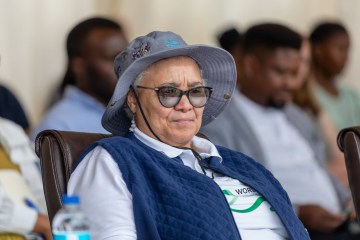
Meanwhile, South African forestry, fisheries and environment minister Willie Aucamp called for stronger regional cooperation, sustainable financing and tougher action against illegal fishing.
Aucamp described the convention as the world’s first legal framework based on the large marine ecosystem approach to ocean governance.
He said stronger coordination, transparent decision-making and improved institutional systems were needed to strengthen the convention.
“Science must remain the foundation of our transboundary co-management,” Aucamp said.
He also stressed the need for sustainable financing to reduce dependence on external funding.
Aucamp called for stronger cooperation in monitoring, surveillance and law enforcement to protect fisheries and marine resources.
He also reaffirmed South Africa’s support for empowering youth and women in marine science and the blue economy.
“South Africa stands ready to work with Angola and Namibia in our shared responsibility to advance the full implementation of the Convention,” he said.