

Renthia Kaimbi
Vice president Lucia Witbooi has declared an end to the era of exporting raw marine products by 2030.
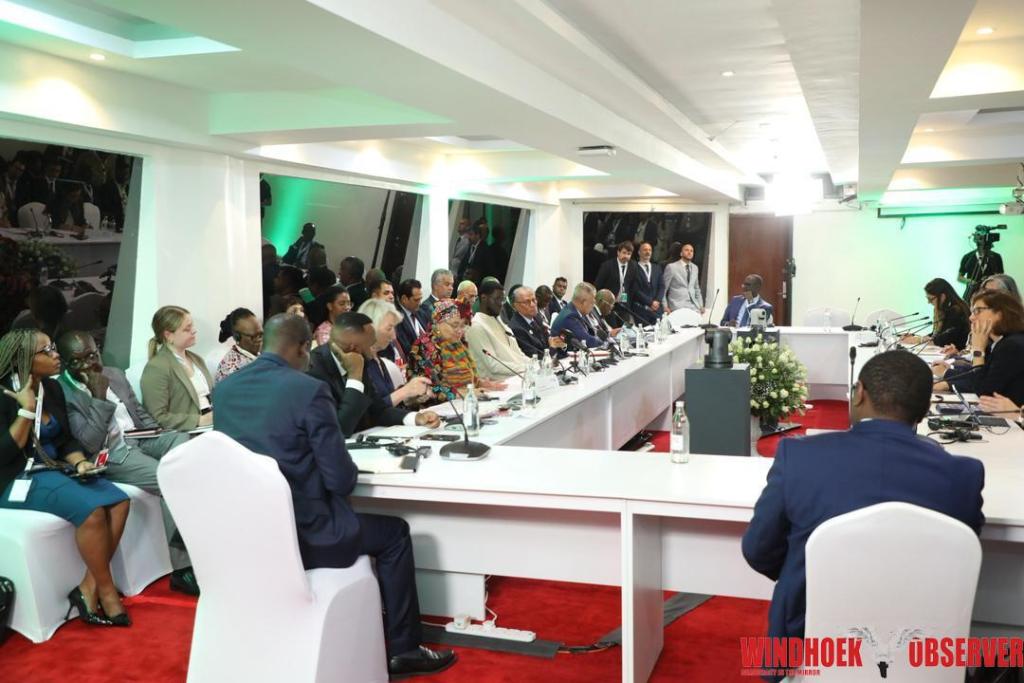
Speaking at the Africa Forward Summit in Nairobi on Tuesday, Witbooi addressed the roundtable on the blue economy and said African countries must move beyond exporting raw resources.
She said Africa continues to lose value because many marine products are exported with little processing.
Witbooi noted that the global blue economy is worth more than US$300 billion, while about 70% of African fish exports leave the continent with minimal value addition.
She said Namibia is shifting towards a system where marine products are caught, processed, packaged and branded locally.
Under Namibia’s sixth National Development Plan (NDP6), the government wants 60% of marine products to undergo secondary and tertiary processing inside the country by 2030.
Witbooi said Namibia is investing in infrastructure and skills development to support the plan.
One of the projects includes the proposed Franco-Namibian Marine Institute, which aims to train 1 000 technicians in shipbuilding, aquaculture and marine robotics by 2030.
She also highlighted the proposed Atlantic Blue Corridor, which aims to connect Walvis Bay with Dakar, Abidjan and Marseille.
The project plans to introduce hydrogen-powered vessels by 2029 and reduce port clearance times to 24 hours.
Witbooi also proposed the creation of a Franco-African Blue Investment Fund to support marine processing projects and attract investment.
She said illegal fishing, pollution and climate change remain major threats to Africa’s coastline and marine resources.
Witbooi called on African countries to protect marine resources while expanding industrial development along the coast.
She said Namibia wants its coastline to support African-owned factories, local jobs and economic growth by 2035.


