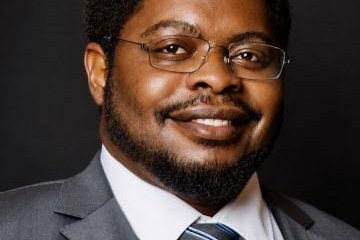
Paul T. Shipale (with inputs by Folito Nghitongovali Diawara Gaspar)
Every time an African burns the shop of another African while corporate power continues extracting wealth from African soil, the architecture of colonialism survives a little longer.
That is the tragedy unfolding in South Africa today.
The violence directed at African migrants is often presented as a crisis of criminality, border control, or social frustration. But beneath the smoke of burnt shops and angry slogans lies a deeper and more uncomfortable reality that millions of people are angry for legitimate reasons, yet much of that anger is being redirected toward the wrong targets.
The real crisis in South Africa is not the Nigerian street vendor, the Somali shopkeeper, the Zimbabwean worker, or the Mozambican labourer.
The real crisis is economic power.
Who owns the land?
Who controls the banks?
Who dominates the mines?
Who finances the industries?
Who controls logistics, insurance, food chains, and strategic capital?
Who decides where wealth flows and where poverty remains?
These are the questions that define the unfinished struggle for liberation in South Africa and across Africa.
Political freedom without economic sovereignty
South Africa defeated apartheid politically, but economic apartheid did not disappear with the first democratic elections in 1994.
The political system changed. The flag changed. The anthem changed.
But ownership patterns remained deeply unequal.
The majority black population entered democracy without meaningful control over the commanding heights of the economy. Land concentration remained severe. Wealth remained heavily centralised. Industrial ownership, finance, and major corporate structures largely stayed in the hands of historical economic power.
This contradiction produced one of the most unequal societies in the world.
Millions of young South Africans today face:
• chronic unemployment,
• collapsing public services,
• urban poverty,
• economic exclusion,
• and declining social mobility.
Their frustration is real.
But frustration without structural analysis becomes dangerous.
Because when people cannot clearly identify the systems shaping their suffering, anger becomes easy to manipulate.
The convenient scapegoat
The foreign African migrant has become the convenient scapegoat.
When jobs are scarce, migrants are blamed.
When crime rises, migrants are blamed.
When businesses fail, migrants are blamed.
When the state collapses under corruption and inequality, migrants are blamed again.
Yet this narrative collapses under serious scrutiny.
The Somali trader did not design South Africa’s unequal economy.
The Zimbabwean worker did not create land dispossession.
The Nigerian entrepreneur did not privatise economic opportunity.
The Congolese labourer did not engineer mass unemployment.
These conditions are rooted in centuries of colonial extraction, racial capitalism, and post-apartheid economic contradictions.
But confronting those structures requires political courage.
Attacking vulnerable Africans is easier than dismantling entrenched economic power.
Afrophobia as a political diversion
Afrophobia is often described merely as hatred toward fellow Africans. But in the South African context, it also functions as a distraction from unresolved economic questions.
This is why the violence cannot simply be explained as “xenophobia”.
If hostility were purely about foreigners, all foreigners would face equal treatment. Yet the reality is different. Black African migrants are disproportionately targeted, while many wealthy foreign investors and multinational economic actors operate without similar public hostility.
That contradiction matters.
The poor African migrant becomes visible because the deeper structures of economic domination remain politically insulated.
Public anger is redirected sideways rather than upward.
Instead of asking:
• Why does a mineral-rich country still suffer mass unemployment?
• Why does inequality remain so extreme?
• Why are vast sectors of the economy still inaccessible to the majority?
• Why is wealth concentrated while poverty expands?
The political conversation shifts toward migrants struggling to survive at the margins of the same unequal system.
This is how structural power protects itself.
The colonial economy never fully died
To understand modern South Africa, one must understand that colonialism and apartheid were not only political systems but also economic systems designed around extraction and exclusion.
Land was seized.
Black labour was exploited.
Mineral wealth was controlled by a minority.
Industrial development served concentrated interests.
African mobility was regulated to maintain labour dependency.
Political democracy dismantled legal apartheid, but it did not fully dismantle the economic architecture created over centuries.
As a result, South Africa entered the democratic era with enormous political expectations but limited structural transformation.
The consequences are now visible extreme inequality, social fragmentation, youth despair, rising anger and competition among the poor for shrinking opportunities.
In such conditions, division becomes easy.
And divided populations rarely challenge entrenched power effectively.
The global dimension of dependency
South Africa’s crisis is not isolated. It reflects a broader African condition.
Across the continent, countries rich in natural resources remain structurally dependent on external markets, foreign capital, and global financial systems.
Zambia exports copper but captures limited industrial value from it.
The Democratic Republic of Congo supplies minerals essential for modern technology while millions remain impoverished.
Oil-producing states continue importing refined petroleum.
African economies export raw materials and import finished products at far higher costs.
The pattern is clear that Africa produces wealth but often does not control wealth.
This was precisely the warning issued by Kwame Nkrumah when he spoke of neo-colonialism, a condition in which nations appear politically independent while their economic direction remains externally influenced.
Likewise, Thomas Sankara warned that political liberation without economic sovereignty would leave Africa vulnerable to permanent dependency.
Their warnings were not ideological exaggerations. They were historical diagnoses.
Pan-Africanism or permanent fragmentation
The violence against fellow Africans in South Africa exposes a painful contradiction.
During the anti-apartheid struggle, African nations sheltered exiles, financed liberation movements, trained fighters, and mobilised diplomatic support against apartheid. African solidarity helped make South African freedom possible.
Yet today, Africans are increasingly portrayed as threats inside the very continent that once proclaimed unity against oppression.
This is not only morally tragic.
It is strategically self-destructive.
Because a fragmented Africa benefits those who already dominate global economic systems.
A divided continent negotiates from weakness. A divided people remain easier to exploit. A divided Africa cannot industrialise effectively, control commodity pricing, or build continental economic power.
This is why Pan-Africanism is not romantic nostalgia.
It is survival.
In a world organised around powerful economic blocs, isolated African states remain vulnerable to external pressure, debt dependency, capital flight, and resource extraction.
Unity is no longer optional.
It is necessary.
The real struggle
South Africans have legitimate grievances. So do millions across Africa. But the real struggle is not between poor Africans competing for survival.
The real struggle concerns ownership, economic control, industrial capacity, land, infrastructure, finance and sovereignty.
The question is not whether African migrants exist in South Africa.
The question is why one of the richest mineral economies in the world still leaves millions economically excluded decades after political liberation.
Until that question is confronted honestly, Afrophobia will continue serving as a dangerous distraction from the unfinished project of economic emancipation.
Because history teaches one painful lesson repeatedly:
When oppressed people turn against one another instead of confronting systems of domination, the structures that impoverish them remain untouched.
And the struggle for freedom remains unfinished. Captains Hendrik Witbooi and Jacob Marenga; chiefs Kahimemua Nguvauva, Samuel Maharero, Nehale lya Mpingana, Mandume ya Ndemufayo, Iipumbu ya Tshilongo, and Hosea Komombumbi Kutako, including all those petitioners at the UN, including our founding father Dr Sam Nujoma and many others such as Moses Garoeb, Reverend Hamutumbangela, Herman Toivo ya Toivo, Reverend Markus Kooper, Hans Beukes, Ismael Fortune, Zedekia Ngavirue, Mburumba Kerina, even Kakurukaze Anna Mungunda and many others, didn’t just fight to host a flag but also for economic freedom. Let us not get distracted and divided by petty issues but stay focused!
Disclaimer: The opinions expressed here do not necessarily reflect those of our employers or this newspaper. They represent our personal views as citizens and pan-Africanists.